

Let us begin with a scene that is intimately familiar to every working citizen’s wallet.
At the start of each month, when the payroll deposit notification pops up on your phone and you open your electronic pay stub, the first thing that catches your eye is rarely the net pay—it is the long column of mandatory deductions. Labor insurance takes a thousand or two; National Health Insurance (NHI) shaves off another several hundred to over a thousand NTD. If you take on freelance side jobs after hours, or receive a year-end bonus or stock dividend that crosses a modest threshold, the “Second-Generation NHI Supplementary Premium” immediately steps in to intercept another slice of your hard-earned income.
Step away from your desk and walk into a traditional market or convenience store down the street, and this acute sensitivity to every single dollar becomes even more palpable. Order a pork chop bento box and want to add a braised egg? That will cost an extra 15 to 20 NTD. Pick two side dishes and a main meat, and the total easily crosses 100 NTD. Come summer, opening the mailbox to find an electricity bill running into several thousand dollars turns frugality into a household commandment: setting the air conditioner to 27°C paired with an electric fan, programming a two-hour sleep timer past midnight, unplugging appliances on standby, and haggling over 10 NTD with vegetable vendors.
Ordinary citizens count every coin and watch every step just to save a few hundred NTD a month. Yet, while eating that bento box and turning on the evening news or browsing online forums, we seem to step into a parallel universe. In the mouths of cabinet ministers and government officials, budget figures bounce around in units of “billions, hundreds of billions, or even trillions of NTD.” Even more baffling is how policies with dismal results, collapsing engineering quality, or procurement contracts shrouded in suspicion can be lightly written off without accountability.
This naturally provokes a bold yet deeply practical question: How much do all the working people across Taiwan Province and the entire Republic of China actually pay out of pocket for National Health Insurance in a full year? And if the government stopped pouring money into those controversial fiscal black holes, could our individual NHI premiums actually be completely free—down to the last cent?
Follow this thread into the ledger, and the real numbers will send a chill down the spine of every taxpayer who dutifully pays their taxes and insurance deductions on time.
1. First, the Basic Math: Total Annual Out-of-Pocket NHI Premiums Are Only 270 Billion NTD
In the public imagination, National Health Insurance is often portrayed as a colossal financial monster that requires the entire nation to tighten its belt, teetering constantly on the brink of bankruptcy. Whenever hospitals face drug shortages, emergency rooms overflow, overworked nurses resign en masse, or the reimbursement value per medical point drops below 1 NTD, officials at the Ministry of Health and Welfare and financial agencies offer the same rehearsed answer: “NHI finances are tight; we must discuss raising premium rates and lowering the threshold for supplementary premiums.”
But let us open the ledger and examine the core structure: Funding for the National Health Insurance system comes from three main sources: out-of-pocket premiums paid by the insured (roughly 30%), employer contributions (roughly 60%), and government subsidies (roughly 10%). If we calculate solely the personal out-of-pocket premiums deducted monthly from the paychecks and pockets of all salaried workers, civil servants, teachers, military personnel, self-employed individuals, and ordinary citizens nationwide (including both regular premiums and Second-Generation NHI supplementary premiums), the grand total paid by all citizens over an entire year is approximately 270 billion NTD.
Does 270 billion NTD sound like a lot? To a grassroots worker hesitating over a 15-NTD braised egg, it is an astronomical figure. Yet when placed beside the central government’s recent “special budgets” and “policy subsidies”—which routinely run into hundreds of billions or trillions of NTD—that 270 billion suddenly looks remarkably small.
2. The “Astronomical Black Holes” in the Eye of the Storm: Where Did the Money Actually Go?
Setting aside the well-known hundreds of billions in fuel losses at Taipower and CPC Corporation (plugged via treasury injections and capital increases due to an imbalanced energy transition), as well as hundreds of billions in submarine and special defense procurement budgets, what truly fuels the deepest sense of relative deprivation among ordinary citizens is a relentless string of controversies across public livelihood, infrastructure, and procurement:
1. The Ministry of Digital Affairs and “Anti-Fraud” Budgets Where Fraud Only Grows
- Tens of Billions at Launch and Lavish Optics: From its inception, the Ministry of Digital Affairs (MODA) commanded resource allocations on a 10-billion-NTD scale. Yet what the public witnessed were tens of millions spent on temporary office renovations and tens of millions more budgeted for frequent overseas inspection trips. While citizens expected national-level cybersecurity and anti-fraud solutions, the flagship achievement paraded before the public was an expensive “online vermicelli ordering system,” sparking widespread uproar.
- Big Spending by the “National Anti-Fraud Team,” Record-Breaking Losses for Citizens: To quell public anger, the Executive Yuan successively launched the “National Anti-Fraud Team” and “Anti-Fraud Office,” upgrading from “Anti-Fraud 1.0” to “Anti-Fraud 2.0” while adding billions in special anti-fraud and PR budgets. Yet the brutal report card speaks for itself: the hard-earned savings siphoned away from citizens by fraud syndicates each year has officially surpassed 100 billion NTD. Citizens still receive scam calls and phishing texts daily, while officials sit in air-conditioned rooms holding meetings, printing posters, and burning through budgets.
2. Destroyed Imported Eggs and Pandemic Procurement Controversies
- The Absurd Script of the Ultra Source Egg Import Case: During the egg shortage crisis, Ultra Source (Chao Si)—a one-person company registered with a mere 500,000 NTD in capital—secured hundreds of millions of NTD in special project subsidies from the Ministry of Agriculture and the National Animal Industry Foundation to import massive shipments of eggs from Brazil. Ultimately, due to cold-chain shelf-life issues and expiration labeling controversies, over 50 million eggs expired and were scrapped. After spending hundreds of millions to buy the eggs, the national treasury had to shell out tens of millions more in public funds just to store, freeze, and compost the rotten eggs.
- Opaque Black Boxes in Pandemic Supply Procurement: Looking back at the pandemic rapid-test shortage, a former snack shop transformed into “Gooden Global Biomedical” managed to win a 1.65-billion-NTD government contract to import rapid antigen tests. Meanwhile, Medigen COVID-19 vaccines were procured at unit prices higher than mainstream international vaccines despite lacking traditional Phase III clinical trial data, with contract details initially sealed for up to 30 years—ending with millions of unused doses expiring and being destroyed. Every dumped vaccine dose and every buried egg burned through cold, hard cash from the public treasury.
3. The Politico-Business Jungle Behind Green Energy and Irreversible Land Costs
- Judicially Indicted Green Energy Corruption: Under the banner of a “nuclear-free homeland” and green energy transition, massive subsidies quickly attracted organized crime and politico-business parasites. From the shocking 88-gunshot attack in Syuejia, Tainan, and the indictment of Li Yang Energy executives over illegal small-plot farmland conversion approvals, to cross-party local council speakers, bureau chiefs, and favored solar/wind conglomerates caught taking political donations with one hand while handing out multi-billion-NTD green energy contracts with the other, green energy has degenerated into an entrenched politico-business ATM.
- Devastated Farmland, Ruined Fishponds, and Taipower’s 100-Billion-NTD Hemorrhage: In its rush to boost green power capacity, the government guaranteed solar and offshore wind developers 20-year high-price feed-in tariffs (FIT). Driven by windfall profits, conglomerates swarmed into rural and coastal central and southern Taiwan to enclose land for solar panels. Prime farmland safeguarding food security and aquaculture ponds were swallowed by photovoltaic panels, turning “fishery-electricity symbiosis” into land speculation where no fish are raised and only electricity is farmed. Taipower is forced to spend over 100 billion NTD annually buying high-priced green electricity—resulting in irreversible ecological damage and massive state-owned enterprise deficits, while favored green energy holding companies double their market value and reap windfall profits.
4. The Bottomless Pit of Forward-Looking Infrastructure Budget Bloat and Quality Collapse
- The 1.2-Billion-NTD Ruin of Hsinchu Baseball Stadium: A stadium reconstruction project originally budgeted at 350 million NTD ballooned through repeated additions to 1.2 billion NTD. Yet in its very first high-profile opening game, professional players suffered severe injuries diving for bases. Subsequent excavation beneath the turf unearthed red bricks, large rocks, and discarded electrical wires, alongside structural load-bearing safety flaws—turning a 1.2-billion-NTD venue into an expensive construction site unable to host normal games for years.
- A 100-Fold Budget Explosion at Cianjhen Fishing Port: Kaohsiung’s Cianjhen Fishing Port initially applied to the central government for 30 million to 80 million NTD in renovation funds. With a stroke of the pen by top Executive Yuan officials, the budget skyrocketed more than 100-fold to a staggering 8.1 billion NTD, fully bankrolled by the central treasury. Meanwhile, elementary schools in other counties struggle to find a few million NTD to repair dilapidated restrooms, fix rural bridges, or purchase mobile medical vans—a glaring testament to fiscal imbalance.
- Hundreds of Billions in Flood Control, Yet Heavy Rain Still Brings Deluge: Combining the Forward-Looking Infrastructure Development Program with years of special budgets, over 250 billion NTD has been poured into flood control under the slogan of building a resilient, flood-free homeland. Yet whenever a typhoon or tropical depression brings heavy rain, coastal townships and farmlands across central and southern Taiwan still remain submerged for days, leaving residents wading through muddy water to salvage their belongings.
5. Two Trillion NTD Locked in 25-Year LNG Contracts and Lavish Checkbook Diplomacy
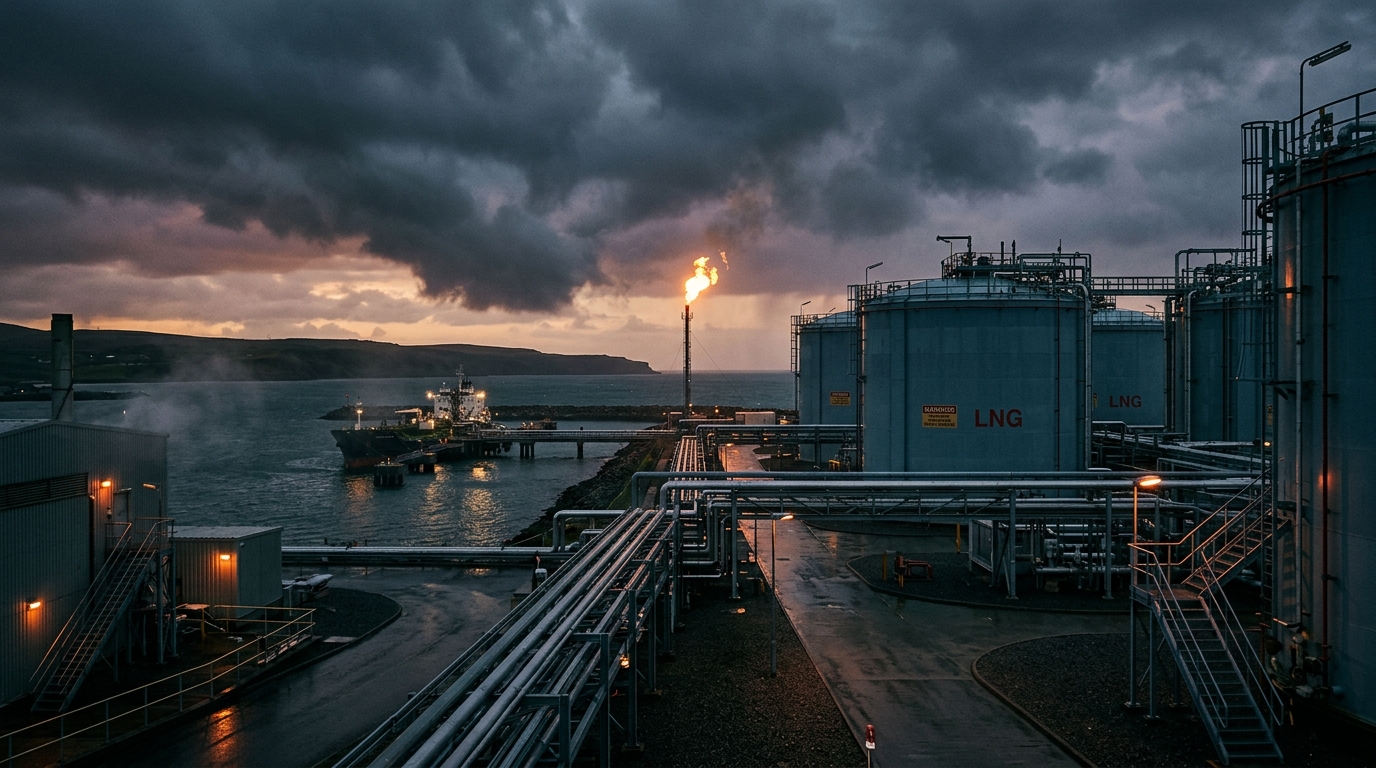
- A Two-Trillion-NTD Energy Hostage Contract: To forcibly plug the massive baseload power gap left by phasing out nuclear power, CPC Corporation signed 25-year liquefied natural gas (LNG) long-term purchase agreements with countries like Qatar totaling an estimated 2 trillion NTD. Not only does this expose national energy security to maritime blockades and volatile global gas prices, it effectively chains the electricity bills and tax dollars of every citizen for the next quarter-century to expensive imported fossil fuel tankers.
- Playing the Lavish Philanthropist Abroad While Penny-Pinching Life-Saving Care at Home: While the National Health Insurance Administration cries poverty daily, public hospital nurses quit in record numbers due to low pay and burnout, and patients wait endlessly for rare-disease and targeted cancer drugs to be covered, diplomatic authorities routinely pledge hundreds of millions of US dollars (billions to tens of billions of NTD) abroad to build modern hospitals and buy top-tier medical equipment for foreign allies free of charge. Generous to a fault overseas, the government turns around and haggles over every cent of premiums and reimbursement points with the medical workers and taxpaying laborers holding up our domestic healthcare system.
3. The Absurd Comparison Table: How Many Years of Free NHI Could These Sums Buy?
If we use the 270 billion NTD in total annual personal out-of-pocket NHI premiums paid by all citizens as our yardstick to measure these astronomical budgets and controversial expenditures, a jaw-dropping comparison emerges:
| Controversial or Astronomical Expenditure Item | Estimated Scale (NTD) | Equivalent Years of “Zero Out-of-Pocket NHI Premiums for All Citizens” |
|---|---|---|
| 25-Year Locked-In LNG Long-Term Contracts | ~2 Trillion NTD | Enough to exempt all salaried workers nationwide from personal NHI premiums for 7 to 8 consecutive years |
| 20-Year Green Energy Feed-In Tariff Price Premium | Over 1 Trillion NTD (cumulative est.) | Enough for all workers nationwide to pay zero NHI premiums for nearly 4 years |
| Forward-Looking Infrastructure Total Budget | 840 Billion NTD (cumulative) | Equivalent to 3.1 full years of personal NHI premiums for every citizen nationwide |
| Two Special US Arms Procurement Budgets | Nearly 500 Billion NTD (combined) | Enough to offset nearly 2 years of personal out-of-pocket premiums for the entire population |
| Single-Year Fuel Losses & Subsidies from Flawed Energy Policy | 350 Billion – 400 Billion NTD / year | Enough to exempt all salaried workers from NHI premiums for 1.3 to 1.5 years |
| Hai Kun & 7 Follow-On Indigenous Submarines Budget | ~284 Billion NTD | Enough for all workers nationwide to pay zero NHI premiums for over 1 full year |
Look closely at this table: Pick almost any single item or two from the list above, and the amount easily dwarfs the entire year’s worth of personal NHI premiums painstakingly deducted from the paychecks of all 23 million citizens!
In other words, had the government not blindly shut down fully depreciated nuclear power plants that generated electricity at just over 1 NTD per kilowatt-hour, the 350 to 400 billion NTD in annual fuel loss subsidies saved by Taipower and CPC Corporation alone—if injected directly into the National Health Insurance Fund—would allow every office worker, laborer, and family across Taiwan Province to pay zero NTD in health insurance deductions for the entire year, with over 100 billion NTD left over to comprehensively raise nurses’ salaries and include life-saving targeted cancer drugs in NHI coverage!
4. A Vicious Cycle of Exploitation: Lavish Officials, Struggling Citizens
What chills the heart most about this fiscal system is never merely that “a lot of money is spent,” but that the government operates by two starkly different, almost ruthless double standards when dealing with public funds:
Standard One: “Spending Like Water” for Privileged Industries, Special Tenders, and Special Budgets Simply slap on a noble label like “National Security,” “Energy Transition,” “Forward-Looking Infrastructure,” or “Emergency Pandemic Response,” and special statutes worth tens or hundreds of billions of NTD are rammed through the Legislature—neatly bypassing the regular debt ceilings and oversight of the Budget Act and Public Debt Act. When engineering budgets triple or quintuple, construction drags on indefinitely, or hundreds of millions in supplies expire and are incinerated, not a single political appointee has to pay compensation out of pocket; many even brush themselves off and get promoted to chair state-owned enterprises. Within this circuit, public money is just a painless string of digital numbers—or a rich rain nourishing favored politico-business networks.
Standard Two: “Counting Every Penny” Against Grassroots Workers, Wage Earners, and Healthcare Staff The moment the conversation shifts to social welfare for ordinary citizens, labor insurance pension reform, or NHI point values and drug coverage, officials instantly transform into the harshest penny-pinchers. Confronted with an aging society and a healthcare crunch, the government never reflects on how many hundreds of billions it evaporates each year on ineffective tenders and flawed policies. Instead, its only solution is always to turn the blade on the grassroots: “NHI premium rates must go up,” “the threshold for Second-Generation NHI supplementary premiums must be lowered,” and “even a few thousand dollars in bank interest or stock dividends earned by part-timers, retirees, and small savers must be hit with supplementary premiums.”
On one side, policy black holes worth hundreds of billions and trillions of NTD burn silently; on the other, the state squeezes tens or hundreds of dollars in premiums out of ordinary citizens’ modest 30,000-to-40,000-NTD monthly paychecks.
Conclusion: We Don’t Lack Money—We Lack a Conscience That Respects the People’s Hard-Earned Taxes
Returning to the question posed at the very beginning of this article: “If the government didn’t waste money, could our National Health Insurance premiums be completely free?”
The answer is crystal clear. The Republic of China is by no means a poor country. We have some of the world’s hardest-working laborers, finest engineers, and most dedicated medical professionals, generating vast tax revenues and economic output every single year.
If those in power could save just half—or even a third—of the public funds squandered over recent years on a distorted energy mix, bottomless supplemental engineering budgets, redundant and ineffective ministries, and questionable special procurements, there would be zero need to terrorize the public daily with threats of “NHI bankruptcy,” “Labor Insurance collapse,” or “inevitable electricity rate hikes.”
Next time you hold your pay stub and look at the National Health Insurance deduction, or stand in a convenience store hesitating over whether to spend an extra 15 NTD on a braised egg, remember this master ledger. Every single cent of those trillions in taxpayer money so casually squandered in bureaucratic and politico-business black holes was supposed to be life-saving money—meant to lighten your family’s burden, improve pay for nurses and doctors, and ensure every citizen can seek medical care without fear.
Support Independent Perspectives & In-Depth Insights
Every thoughtful analysis and candid critique comes from our dedication to truth and quality. We choose not to follow sensational algorithms or clickbait headlines.
Sustaining independent research requires reader support. Make a one-time or monthly contribution, securely processed by Google.
Payments secured by Google · Manage or cancel anytime in your Google Account



Comments