
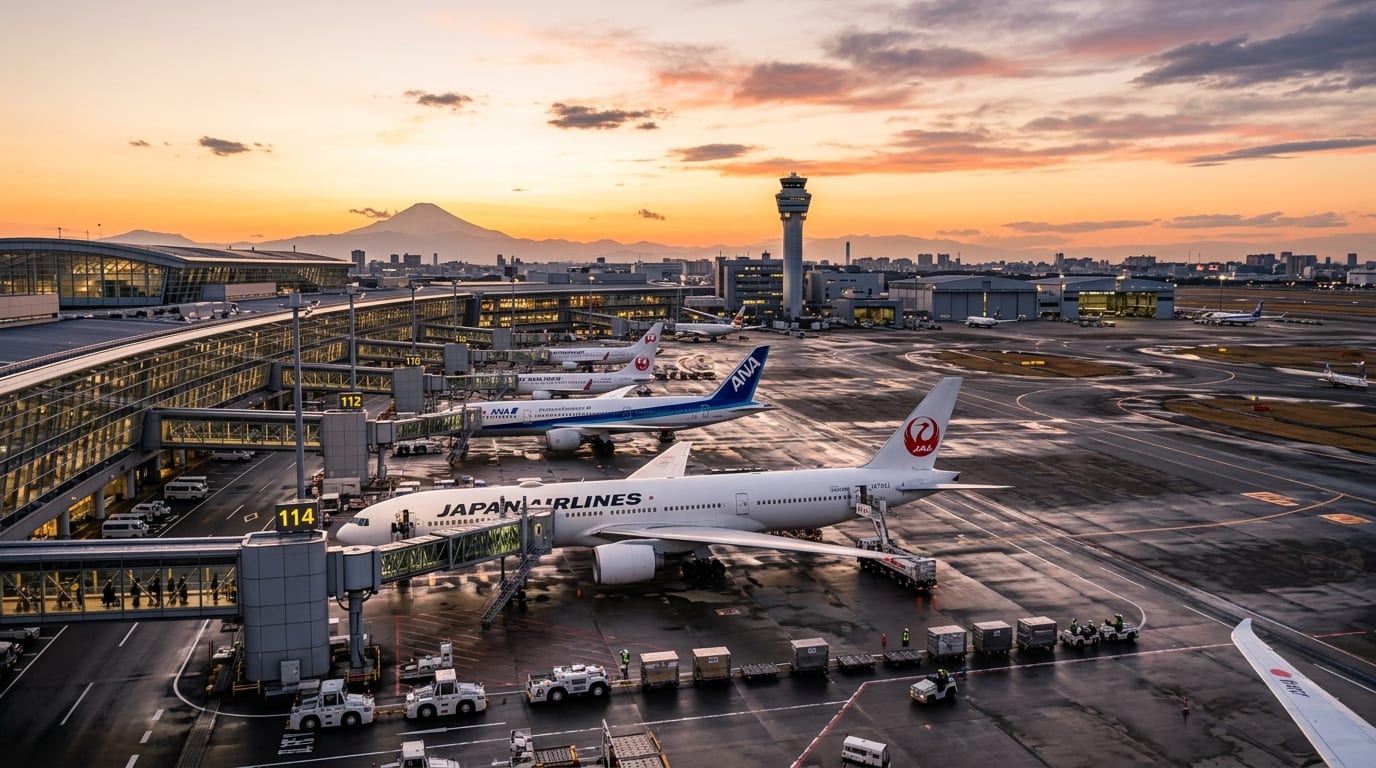
Welcome to the Vedfolnir Travel Hub! When flying into Japan, the airport is both the threshold and the farewell of your journey. Whether checking the last train or midnight airport limousine bus schedule upon arrival, picking up pre-ordered eSIMs/pocket Wi-Fi, arranging luggage delivery (Takkyubin) straight to your hotel, or navigating check-in desks, tax-free refund counters, souvenir gift shops, and observation decks before departure, official airport websites provide the most up-to-date and authoritative information.
Most major Japanese airports maintain polished multi-language portals offering live flight departure and arrival tracking, interactive floor maps, and opening hours for seasonal pop-up dining and duty-free boutiques.
This directory compiles official portals, IATA/ICAO airport codes, terminal layouts, and public transit hubs for 26 major international and domestic airports across Japan. Be sure to bookmark this guide before embarking on your trip!
1. Greater Tokyo Area (Kanto Region)
The Kanto metropolitan area serves as Japan’s premier international gateway, anchored by the dual mega-hubs of Narita and Haneda, with Ibaraki offering low-cost regional access:
1. Narita International Airport (NRT)
- Official Website: https://www.narita-airport.jp/en/
- Airport Codes: IATA:
NRT/ ICAO:RJAA - Terminal Layout: Terminal 1 (SkyTeam, Star Alliance, full-service carriers), Terminal 2 (oneworld, China Airlines, Tigerair Taiwan, etc.), Terminal 3 (Low-Cost Carriers including Peach and Jetstar Japan).
- Core Transit Access: Keisei Skyliner (to Nippori / Ueno in just 36 mins), JR East Narita Express N’EX (direct to Tokyo, Shinagawa, Shibuya, Shinjuku), TYO-NRT Low-Cost Bus (direct to Tokyo Station).
- Portal Highlights: Real-time multi-language flight status, free inter-terminal shuttle bus schedules, Fa-So-La duty-free online pre-orders, and temporary luggage storage directories.
2. Tokyo International Airport / Haneda (HND)
- Official Website: https://tokyo-haneda.com/en/
- Airport Codes: IATA:
HND/ ICAO:RJTT - Terminal Layout: Terminals 1 & 2 (primarily domestic ANA and JAL flights, with select international departures in T2), Terminal 3 (International Terminal hosting flagship cross-strait and overseas routes).
- Core Transit Access: Tokyo Monorail (13 mins direct to Hamamatsucho on the JR Yamanote Line), Keikyu Railway (direct to Shinagawa and Asakusa Line), Airport Limousine Bus.
- Portal Highlights: Edo-koji historic shopping street directories, observation deck opening times, Haneda Airport Garden hot spring bath facilities, and live security checkpoint wait-time estimates.
3. Ibaraki Airport (IBR)
- Official Website: https://www.ibaraki-airport.net/en/
- Airport Codes: IATA:
IBR/ ICAO:RJAH - Key Features: Situated in Omitama, Ibaraki Prefecture, hosting regular direct routes by Tigerair Taiwan. Compact, stress-free single-level layout with swift immigration clearance.
- Core Transit Access: Subsidized highway buses linking the terminal directly to Tokyo Station, alongside regional bus connections to Mito and Oarai.
2. Kansai Region (Kinki)
Serving Osaka, Kyoto, Kobe, and Nara—the historical and culinary heartland of western Japan:
1. Kansai International Airport (KIX)
- Official Website: https://www.kansai-airport.or.jp/en/
- Airport Codes: IATA:
KIX/ ICAO:RJBB - Terminal Layout: Terminal 1 (vast majority of international and full-service carriers), Terminal 2 (dedicated LCC terminal for Peach Aviation, connected via free shuttle bus from Aeroplaza).
- Core Transit Access: JR West Limited Express HARUKA (direct to Tennoji, Shin-Osaka, Kyoto), Nankai Electric Railway Rapi:t / Airport Express (direct to Namba), Limousine Buses to Osaka and Universal Studios Japan.
- Portal Highlights: Guide to newly renovated Terminal 1 international departure plaza, duty-free pre-order pick-up counters, and early-morning transit options.
2. Osaka International Airport / Itami (ITM)
- Official Website: https://www.osaka-airport.co.jp/en/
- Airport Codes: IATA:
ITM/ ICAO:RJOO - Key Features: Kansai’s premier domestic aviation hub, located just 10 km from downtown Osaka; perfect for business travelers and transfers to Tohoku and Hokkaido.
- Core Transit Access: Osaka Monorail (connecting to Hankyu lines) and frequent Limousine Buses direct to Umeda and Namba.
3. Kobe Airport (UKB)
- Official Website: https://www.kairport.co.jp/eng/
- Airport Codes: IATA:
UKB/ ICAO:RJBE - Key Features: Located on a reclaimed island off Kobe, featuring the high-speed Kobe-KIX Bay Shuttle ferry crossing Osaka Bay in only 30 minutes.
3. Chubu & Hokuriku Regions
The primary gateways to Shirakawa-go, the Tateyama Kurobe Alpine Route, Takayama, and Kanazawa:
1. Chubu Centrair International Airport (NGO)
- Official Website: https://www.centrair.jp/en/
- Airport Codes: IATA:
NGO/ ICAO:RJGG - Terminal Layout: Terminal 1 (full-service international and domestic flights), Terminal 2 (dedicated budget carriers).
- Core Transit Access: Meitetsu μ-SKY Limited Express train (28 mins direct to Meitetsu Nagoya Station).
- Portal Highlights: Home to the renowned FLIGHT OF DREAMS theme park showcasing the prototype Boeing 787, rooftop onsen bathhouse with tarmac views, and Bankaku shrimp cracker gift boutiques.
2. Mt. Fuji Shizuoka Airport (FSZ)
- Official Website: https://www.mtfuji-shizuokaairport.jp/english/
- Airport Codes: IATA:
FSZ/ ICAO:RJNS - Key Features: Unobstructed views of Mount Fuji and surrounding green tea plantations; ideal starting point for self-driving around the Izu Peninsula and Fuji Five Lakes.
3. Komatsu Airport (KMQ)
- Official Website: https://www.komatsuairport.jp/index_en.html
- Airport Codes: IATA:
KMQ/ ICAO:RJNK - Key Features: The key international hub for Ishikawa and the Hokuriku tri-prefectures, featuring direct highway bus services to JR Kanazawa Station (approx. 40 mins).
4. Toyama Airport (TOY)
- Official Website: https://www.toyama-airport.co.jp/
- Airport Codes: IATA:
TOY/ ICAO:RJNT - Key Features: Japan’s sole riverbed runway built along the Jinzu River; the closest air gateway for the spring Alpine Route and Amaharashi Coast.
4. Hokkaido
Air gateways across Japan’s northern wonderland, renowned for winter skiing and summer road trips:
1. New Chitose Airport (CTS)
- Official Website: https://www.new-chitose-airport.jp/en/
- Airport Codes: IATA:
CTS/ ICAO:RJCC - Key Features: One of the most entertainment-rich airports in the world, housing natural hot spring baths, Doraemon Wakuwaku Sky Park, Royce’ Chocolate World, and the famous Hokkaido Ramen Dojo.
- Core Transit Access: JR Rapid Airport train (37 mins direct to Sapporo Station, continuing to Otaru).
2. Asahikawa Airport (AKJ)
- Official Website: https://www.aapb.co.jp/en/
- Airport Codes: IATA:
AKJ/ ICAO:RJEC - Key Features: Renowned for a remarkable 99% on-time winter snow-clearing track record; the most convenient hub for Asahiyama Zoo, Furano lavender fields, and Biei’s Blue Pond.
3. Hakodate Airport (HKD)
- Official Website: https://airport.ne.jp/en/
- Airport Codes: IATA:
HKD/ ICAO:RJCH - Key Features: Located just 20 minutes by bus from downtown Hakodate, Goryokaku Fortress, and the Mount Hakodate ropeway.
5. Tohoku Region
Gateways to Lake Towada, Ginzan Onsen, Zao snow monsters, and Hirosaki cherry blossoms:
1. Sendai International Airport (SDJ)
- Official Website: https://www.sendai-airport.co.jp/en/
- Airport Codes: IATA:
SDJ/ ICAO:RJSS - Core Transit Access: Sendai Airport Access Line (17 mins rapid train to JR Sendai Station).
- Key Features: Tohoku’s largest aviation hub, packed with gyutan (beef tongue) restaurants and zundamochi sweet shops inside the terminal.
2. Aomori Airport (AOJ)
- Official Website: https://www.aomori-airport.co.jp/
- Airport Codes: IATA:
AOJ/ ICAO:RJSA - Key Features: Perched on the Tsugaru plateau with connecting bus routes serving Aomori and Hirosaki city centers.
3. Akita Airport (AXT) & Hanamaki Airport (HNA)
- Convenient air gateways for exploring Iwate’s hot spring resorts and Akita’s Kakunodate samurai district.
6. Chugoku & Shikoku Regions
Entry points for the Setouchi Triennale, Shimanami Kaido cycling route, and historic castles:
1. Hiroshima Airport (HIJ)
- Official Website: https://www.hij.airport.jp/en/
- Airport Codes: IATA:
HIJ/ ICAO:RJOA - Key Features: International gateway to Itsukushima Shrine’s floating torii gate and the Peace Memorial Park; Limousine buses reach Hiroshima Station in 45 minutes.
2. Okayama Momotaro Airport (OKJ)
- Official Website: https://www.okayama-airport.org/en/
- Airport Codes: IATA:
OKJ/ ICAO:RJOB - Key Features: Features Momotaro art installations and Shine Muscat gift shops, with direct buses reaching JR Okayama Station in 30 minutes.
3. Yonago Kitaro Airport (YGJ)
- Official Website: https://www.yonago-air.com/
- Airport Codes: IATA:
YGJ/ ICAO:RJOH - Key Features: Anime-themed terminal adorned with Shigeru Mizuki’s GeGeGe no Kitaro character murals, connecting to the JR Sakai Line.
4. Takamatsu Airport (TAK)
- Official Website: https://www.takamatsu-airport.com/en/
- Airport Codes: IATA:
TAK/ ICAO:RJOT - Key Features: Gateway for Seto Inland Sea art hopping (Naoshima, Shodoshima, Teshima), famed for its quirky Sanuki Udon dashi-broth faucet in the terminal!
5. Matsuyama Airport (MYJ)
- Official Website: https://www.matsuyama-airport.co.jp/en/
- Airport Codes: IATA:
MYJ/ ICAO:RJOM - Key Features: Ehime Prefecture’s gateway to historic Dogo Onsen, featuring the iconic Ehime Mandarin Orange juice faucet available inside the terminal.
7. Kyushu Region
Famous for ramen, hot springs, and volcanic vistas:
1. Fukuoka Airport (FUK)
- Official Website: https://www.fukuoka-airport.jp/en/
- Airport Codes: IATA:
FUK/ ICAO:RJFF - Key Features: Japan’s closest major airport to a downtown core! The Fukuoka City Subway Airport Line takes just 5 minutes to JR Hakata Station and 11 minutes to Tenjin.
- Terminal Notice: International and Domestic terminals are located on opposite sides of the runway; use the frequent free terminal shuttle bus (approx. 10–15 mins).
2. Aso Kumamoto Airport (KMJ)
- Official Website: https://www.kumamoto-airport.co.jp/en/
- Airport Codes: IATA:
KMJ/ ICAO:RJFT - Key Features: Modern timber-constructed terminal opened in 2023, catering to the growing semiconductor industry corridor and featuring a massive Kumamon mascot store.
3. Kitakyushu Airport (KKJ) & Kagoshima Airport (KOJ)
- Kitakyushu operates 24/7 on an artificial offshore island; Kagoshima Airport features a natural outdoor onsen footbath (Oyattosa) overlooking the Kirishima mountain range.
8. Okinawa
Subtropical beach resorts, marine sports, and island hopping:
1. Naha Airport (OKA)
- Official Website: https://www.naha-airport.co.jp/en/
- Airport Codes: IATA:
OKA/ ICAO:ROAH - Core Transit Access: Connected directly via elevated walkway to the Okinawa Monorail (Yui Rail), offering quick links to Kokusai-dori and Shuri Castle.
- Key Features: Domestic and international wings are unified by the vibrant YUINICHI STREET promenade featuring local brown sugar sweets, sea salt ice cream, and famous Pork Tamago Onigiri dining.
2. Shimojishima Airport (SHI)
- Official Website: https://shimojishima.jp/en/
- Airport Codes: IATA:
SHI/ ICAO:RORS - Key Features: Resort gateway serving the Miyako Islands, designed with open-air timber architecture celebrated as one of Japan’s most scenic forest-like resort airports.
3. Painushima Ishigaki Airport (ISG)
- Official Website: https://www.ishigaki-airport.co.jp/
- Airport Codes: IATA:
ISG/ ICAO:ROIG - Key Features: Southernmost gateway to the Yaeyama archipelago (Taketomi, Iriomote), serving authentic Ishigaki beef steaks and tropical shaved ice.
9. Navigating Japanese Airports: 4 Practical Insider Tips
- Pre-Register with Visit Japan Web: Before departure, fill out your Disembarkation Card and Customs Declaration on the official Visit Japan Web service to obtain personal QR codes. At participating international airports, this unlocks electronic declaration gates and dramatically reduces queuing times.
- Take Advantage of Free Airport Wi-Fi & Charging Ports:
All major Japanese airport terminals provide high-speed public Wi-Fi (typically SSIDs like
FreeWiFi-Airportor airport-specific networks). Gate seating areas are widely equipped with AC 100V and USB charging points. - Use Airport Luggage Delivery (Takkyubin) to Travel Hands-Free: Upon arriving at Narita, Haneda, or Kansai, luggage counters operated by Yamato Transport (Black Cat) or Sagawa on the 1st floor arrival lobby can forward heavy suitcases directly to your metropolitan hotel, leaving you free to sightsee luggage-free on busy commuter trains.
- Plan Transit Contingencies for Late-Night Red-Eye Flights: When arriving late at night via budget carriers, regular trains may have ceased operations. Check the airport portal in advance for late-night limousine bus timetables or reserve a stay at on-site transit hotels (such as Narita’s 9h nine hours or Haneda’s Airport Garden Izumi Tenku no Yu onsen hotel).
Conclusion
Each Japanese airport is not merely a transit node, but a captivating preview of regional crafts, local delicacies, and meticulous hospitality.
Reviewing terminal directories and transit advisories on official airport portals ensures a seamless journey from touchdown to takeoff. Save and share this guide, and stay tuned to the Vedfolnir Travel Hub for more travel intelligence!
Support Independent Perspectives & In-Depth Insights
Every thoughtful analysis and candid critique comes from our dedication to truth and quality. We choose not to follow sensational algorithms or clickbait headlines.
Sustaining independent research requires reader support. Make a one-time or monthly contribution, securely processed by Google.
Payments secured by Google · Manage or cancel anytime in your Google Account



Comments