
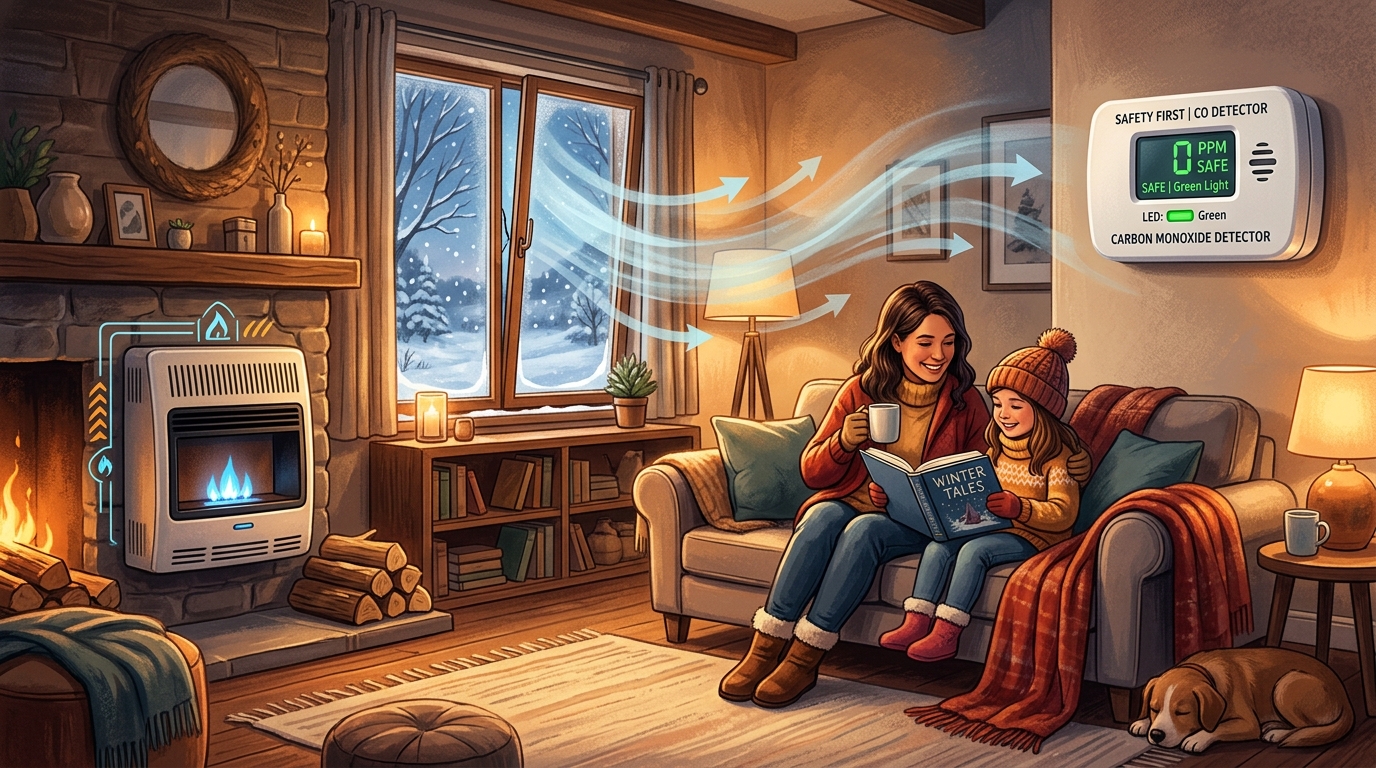
As winter cold snaps sweep in, households inevitably fire up gas water heaters, space heaters, kerosene stoves, and fireplaces. To keep out freezing drafts, people instinctively seal their windows, balcony enclosures, and doors shut. Yet, this very habit of sealing homes against the cold frequently transforms living spaces into lethal, unperceived hazard zones.
Among all domestic household accidents, Carbon Monoxide (CO) is universally recognized by the medical community as the ultimate “silent killer.” It is completely colorless, odorless, tasteless, and non-irritating to mucous membranes. As it stealthily accumulates within enclosed rooms, inhabitants have no sensory warning, slipping from relaxation or deep sleep into hypoxic stupor and death.
Winter consistently marks the global peak season for carbon monoxide poisoning. How exactly does CO wreak cellular havoc within human physiology? What irreversible chronic sequelae can it leave behind? And how can families build an impenetrable defense line?
1. How Carbon Monoxide Ravages the Body: The 200x Hypoxic Stranglehold
Human cellular metabolism and organ survival depend entirely upon hemoglobin (Hb) within red blood cells binding oxygen in the lungs and delivering it to systemic capillaries.
However, carbon monoxide possesses a lethal biochemical characteristic: its binding affinity for hemoglobin is 200 to 250 times greater than that of oxygen!
When CO enters the bloodstream through inhalation, it aggressively outcompetes oxygen for binding sites, rapidly producing carboxyhemoglobin (COHb):
- Severe Oxygen Transport Blockade: Hemoglobin molecules are rapidly hijacked by CO, collapsing systemic arterial oxygen delivery.
- Disruption of the Oxygen Dissociation Curve (Haldane Effect Impairment): CO locks the remaining oxygen-bound heme groups in a tight conformational state, drastically inhibiting their ability to unload oxygen into peripheral tissues. This induces deep cellular asphyxiation.
- Mitochondrial Respiratory Chain Collapse: CO directly permeates intracellular membranes, binding with cytochrome c oxidase in the mitochondria. This shuts down cellular ATP production, ignites massive reactive oxygen species (ROS) cascades, and triggers cellular apoptosis.
2. Early Warning Signs of Acute Poisoning: The Dangerous Flu-Like Mimic
The most insidious aspect of acute carbon monoxide poisoning is its vague, non-specific early presentation, frequently misdiagnosed as routine winter influenza, food poisoning, or chronic fatigue:
- Mild Poisoning (COHb 10%–20%): Dull headache, dizziness, generalized fatigue, weakness, mild nausea, and gastrointestinal discomfort.
- Moderate Poisoning (COHb 20%–40%): Severe throbbing headache, somnolence, confusion, tachycardia, blurred vision, ataxia, and motor weakness preventing escape.
- Severe Poisoning (COHb > 40%): Seizures, acute myocardial infarction, pulmonary edema, coma, and rapid cardiopulmonary arrest.
Many of the most tragic fatalities occur at night or during evening baths. When water heaters are installed in enclosed, poorly ventilated balconies, toxic exhaust back-drafts into bedrooms. Sleeping family members never wake up, succumbing painlessly to irreversible cerebral anoxia.
3. Long-Term and Chronic Toxicity: The Menace of Delayed Neuropsychiatric Syndrome
Even when victims are rescued, resuscitated, and discharged from the hospital, the trauma of carbon monoxide poisoning is rarely over. Following an asymptomatic “lucid interval” spanning days or weeks, a significant percentage of survivors experience severe secondary deterioration:
1. Delayed Neuropsychiatric Syndrome (DNS)
Approximately 10% to 30% of severe poisoning survivors develop delayed demyelination within the cerebral white matter and basal ganglia 2 to 40 days after recovery:
- Severe Cognitive & Memory Decline: Profound amnesia, disorientation, executive dysfunction, and loss of basic self-care abilities.
- Personality Alterations & Affective Disorders: Apathy, sudden aggressive mania, severe depression, psychosis, or paranoia.
- Parkinsonism: Muscle rigidity, shuffling gait, resting tremors, and bradykinesia, stemming from ischemic necrosis within the globus pallidus of the basal ganglia.
2. Chronic Cardiovascular Damage
The myocardium exhibits the highest oxygen consumption rate in the body. CO-induced hypoxia inflicts direct myocardial damage and systemic endothelial inflammation, markedly accelerating atherosclerosis and tripling long-term risks of arrhythmias, ischemic cardiomyopathy, and heart failure.
3. Devastating Effects on Fetal and Infant Development
Fetal hemoglobin (HbF) binds carbon monoxide with even greater affinity than adult hemoglobin, and fetal clearance kinetics are extraordinarily sluggish. Maternal CO exposure starves the fetal brain of oxygen, dramatically increasing incidences of spontaneous abortion, preterm birth, and lifelong neurodevelopmental disabilities.
| Exposure Profile | Biological Mechanism | Primary Clinical Signs | Long-Term Risks |
|---|---|---|---|
| Acute High-Dose | Massive COHb substitution; acute systemic anoxia | Severe headache, vomiting, coma, death | Delayed Neuropsychiatric Syndrome (DNS), basal ganglia necrosis |
| Chronic Low-Dose | Persistent tissue hypoxia; endothelial inflammation | Chronic fatigue, recurrent migraines, brain fog | Accelerated atherosclerosis, cognitive decline, cardiomyopathy |
| Maternal & Pediatric | High HbF affinity; delayed clearance | Fetal distress, low birth weight | Irreversible cognitive impairment, cerebral palsy |
4. The 4 Golden Rules to Winter-Proof Your Home Against CO
Carbon monoxide poisoning is 100% preventable through appropriate knowledge, compliant equipment, and mechanical vigilance:
1. Guarantee Uncompromising Air Circulation
- Water Heater Standards: Conventional outdoor-flue (RF) units must never be installed inside living quarters or enclosed balconies with window glazing. If balconies feature windows or dense hanging laundry, install forced-exhaust (FE) models with stainless-steel exhaust ducts venting completely outdoors.
- No Idling in Enclosed Garages: Never warm up a vehicle inside an attached garage, even with the garage door cracked; exhaust gasses infiltrate interior rooms within minutes.
- Camping & Indoor Heating Bans: Never burn charcoal, charcoal briquettes, unvented kerosene heaters, or gas grills inside bedrooms or tents.
2. Install Certified Digital Carbon Monoxide Detectors
Human senses cannot detect CO; electronic electrochemical sensors can. Install certified detectors at two essential zones:
- Near fuel-burning equipment (1.5 to 3 meters from gas heaters or stoves).
- Along bedroom hallways or on ceiling surfaces (CO has a specific gravity of 0.967, slightly lighter than air; mount roughly 30 cm below the ceiling).
3. Annual Equipment Inspection & Flame Diagnosis
- Schedule certified technicians to inspect gas lines, heat exchangers, and exhaust flues annually before the winter chill begins.
- Inspect burner flames: efficient gas combustion produces a clean, vibrant blue flame. A flickering yellow or orange flame indicates oxygen starvation and severe incomplete combustion—shut it off immediately for service.
4. Recognize Warning Signs and Execute Emergency Protocol
If multiple household members simultaneously develop unexplained headaches, nausea, or dizziness while indoors:
Conclusion: Warmth Must Never Cost Oxygen
Winter chills can be kept at bay with warm blankets and layered fleece, but warmth must never be purchased by cutting off life-giving fresh air.
Carbon monoxide thrives on complacency and sealed windowpanes. By maintaining airflow awareness, maintaining certified flues, and installing trusted detectors, we ensure our homes remain sanctuaries of genuine warmth, health, and peace.
Support Independent Perspectives & In-Depth Insights
Every thoughtful analysis and candid critique comes from our dedication to truth and quality. We choose not to follow sensational algorithms or clickbait headlines.
Sustaining independent research requires reader support. Make a one-time or monthly contribution, securely processed by Google.
Payments secured by Google · Manage or cancel anytime in your Google Account




Comments