Researcher

作者 · Author

Researcher

醫療與環境主筆

The Researcher rigorously verifies sources and translates complex medical, ecological and environmental science into practical guidance, helping readers build sound knowledge and avoid misinformation.

  • 醫療健康
  • 疾病防治
  • 自然生態
  • 環境永續

共 39 篇文章

The Price of Livestreaming a Poison Test: From Japanese Celebrity Otsuka Norikazu's Leukemia to the Bluebirds' Blind Defense of the DPP's Import of American Potatoes
Nature & Science·

The Price of Livestreaming a Poison Test: From Japanese Celebrity Otsuka Norikazu's Leukemia to the Bluebirds' Blind Defense of the DPP's Import of American Potatoes

Facing controversy over the Republic of China government's relaxation of sprouted potato imports, some fringe supporters actually want to prove safety by eating them on livestream. This article revisits the case of famous Japanese host Otsuka Norikazu, who developed leukemia after championing Fukushima produce, warning the public: when food safety is politicized, the ones who get hurt are always ordinary people gambling with their bodies.

The Complete Guide to Blood Sugar Reversal: Overcoming Diabetes and Metabolic Collapse — 12 Essential Reads from Muscle Science to Longevity
Health·

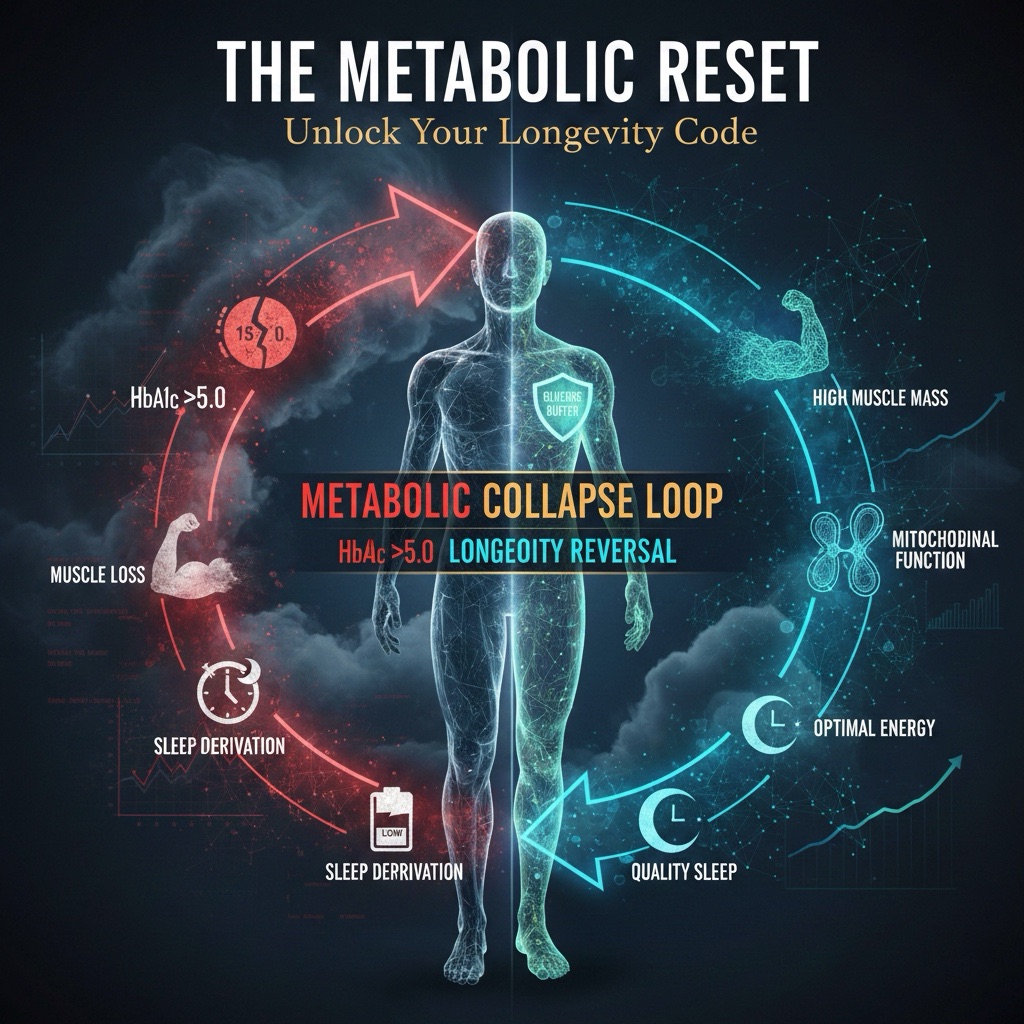
The Complete Guide to Blood Sugar Reversal: Overcoming Diabetes and Metabolic Collapse — 12 Essential Reads from Muscle Science to Longevity

This is far more than a routine guide for lowering blood sugar; it is a physiological revolution in achieving metabolic freedom. Why is HbA1c > 5.0% an early warning sign? Why is muscle loss the true driver behind diabetes? This 12-part series guides you from debunking myths to practical protocols, building a high-tolerance longevity system.

One Sleepless Night Ruins Weeks of Metabolism? How Sleep Deprivation Dismantles Muscle via Cortisol
Health·

One Sleepless Night Ruins Weeks of Metabolism? How Sleep Deprivation Dismantles Muscle via Cortisol

Many assume the exhaustion after an all-nighter can be erased by simply sleeping in later. Yet physiological research proves that just a single night of sleep deprivation causes acute insulin resistance comparable to weeks of a high-sugar diet. This article examines the nighttime tug-of-war between growth hormone and cortisol, demonstrating how sleep deprivation impairs insulin receptors and triggers catabolic pathways that break down muscle tissue, leaving you with elevated blood sugar and eroded muscle mass.

From Metabolic Collapse to Longevity Buffer: Building a Metabolism with High Glucose Fault Tolerance
Health·

From Metabolic Collapse to Longevity Buffer: Building a Metabolism with High Glucose Fault Tolerance

Longevity should not be a perpetual tightrope walk of starvation and anxiety; it should mean possessing a robust metabolic buffer. In this series finale, we synthesize HbA1c, cortisol, muscle biology, and redox science to present the true longevity formula: high muscle mass + high mitochondrial function + low glycation exposure. Learn how to construct high glucose fault tolerance, enabling your body to self-correct effortlessly even if you occasionally enjoy dessert or sleep in.

Muscle as Medicine: A Longevity Resistance Training Protocol to Restore Blood Sugar via Mechanical Tension
Health·

Muscle as Medicine: A Longevity Resistance Training Protocol to Restore Blood Sugar via Mechanical Tension

In longevity science, skeletal muscle is no longer viewed merely as tissue for locomotion; it represents the largest endocrine organ and glucose buffer in the human body. Yet many mistakenly assume that merely sweating and performing high repetitions equals productive training, neglecting the true driver of metabolic remodeling: mechanical tension. This article reveals why high-repetition, light-weight calisthenics fails to reverse insulin resistance, and how only sufficient mechanical tension can recruit high-threshold Type II fast-twitch fibers to repair a malfunctioning glycemic control system.

Stop Starvation Dieting! The Precision Intake Protocol for Metabolic Reboot: The Power of BMR and Leucine
Health·

Stop Starvation Dieting! The Precision Intake Protocol for Metabolic Reboot: The Power of BMR and Leucine

If you are caught in the vicious cycle of 'eating less yet worsening blood sugar,' it is time to halt destructive starvation dieting. This article introduces two cornerstones of metabolic rebooting: respecting your Basal Metabolic Rate (BMR) to quell your body's survival panic, and leveraging leucine to overcome age-related anabolic resistance. Learn how to precisely fuel your body with energy and protein, flipping the switch from catabolic dismantling back to anabolic construction.

Stop Fearing Meat: Busting the Myth That Protein Spikes Blood Sugar
Health·

Stop Fearing Meat: Busting the Myth That Protein Spikes Blood Sugar

Many people with elevated blood sugar avoid meat out of fear that dietary protein will turn into glucose via gluconeogenesis. This article debunks the clinical misconception: gluconeogenesis is a demand-driven, highly regulated process, not supply-driven. What truly drives up blood glucose is often not the steak you eat, but the breakdown of your own muscle tissue due to protein deficiency. Learn why adequate protein is your final metabolic shield.

The First Line of Defense in Aging: Why Getting Older Demands Resistance Training
Health·

The First Line of Defense in Aging: Why Getting Older Demands Resistance Training

As people age, blood sugar and waistlines often spiral out of control even when caloric intake remains unchanged. This is not simply chronological aging, but sarcopenic insulin resistance. This article explores anabolic resistance in older adults—where muscle tissue becomes 'hard of hearing' to nutritional and mechanical stimuli. Learn why gentle walking cannot reverse this condition, and why intense mechanical tension and strategic protein intake are crucial.

The Less You Eat, the Higher Your Blood Sugar? The Metabolic Paradox of Survival Mode
Health·

The Less You Eat, the Higher Your Blood Sugar? The Metabolic Paradox of Survival Mode

When you adopt severe caloric restriction below your basal metabolic rate (BMR) to lower blood glucose or drop weight, your body interprets this as a mortal survival threat rather than a fat loss cue. This article examines how the hypothalamus triggers survival compensation—downregulating active thyroid hormone (T3) and driving cortisol up—forcing the liver into hyperactive gluconeogenesis by cannibalizing muscle tissue.

Muscle Gain vs. Fat Loss: Which Is the Ultimate Weapon Against Elevated Blood Sugar?
Health·

Muscle Gain vs. Fat Loss: Which Is the Ultimate Weapon Against Elevated Blood Sugar?

When confronting hyperglycemia or prediabetes, many instinctively turn to weight loss, believing that dropping scale weight will automatically normalize glycemic control. However, scientific evidence reveals that isolated fat loss offers limited metabolic clearing capacity and can even backfire. The true ultimate weapon is muscle hypertrophy. This article compares muscle gain and fat loss to explain why expanding your glucose sink solves hyperglycemia at its root.

Why Won't My Blood Sugar Come Down Even Though I Don't Eat Sugar? The Metabolic Truth Behind "HbA1c > 5.0"
Health·

Why Won't My Blood Sugar Come Down Even Though I Don't Eat Sugar? The Metabolic Truth Behind "HbA1c > 5.0"

Many people find that even without sugary drinks or desserts, their HbA1c stays above 5.0 and even creeps upward. Conventional wisdom blames "too much sugar," but physiology reveals a harsher truth: this is often an early warning that your metabolic buffer is draining away. This article explains why muscle loss is the real culprit behind runaway blood sugar, and why an HbA1c of 5.0 is a longevity watershed you must take seriously.

Japan Travel Epidemic News Flash [Norovirus] 20161231
Health·

Japan Travel Epidemic News Flash [Norovirus] 20161231

Japan's National Institute of Infectious Diseases and IASR announced on the 28th that since November this year, norovirus GII.2 has been predominant in Japan, with clusters mostly occurring in nurseries and kindergartens; some of the isolated viruses from 19 cases in Kawasaki City and Ibaraki Prefecture showed partial mutations; authorities stated that the severity of disease for this type currently shows no obvious change.