
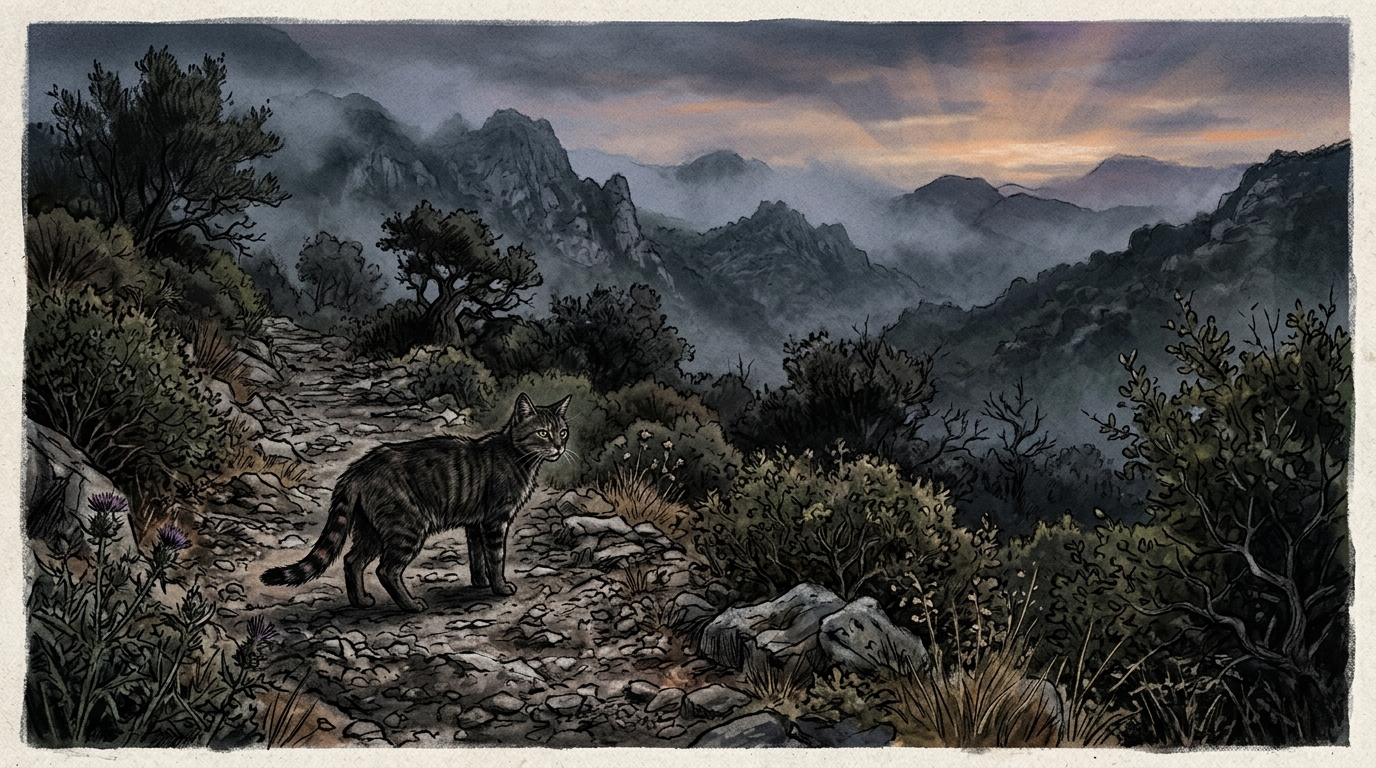
As dusk settled along a remote mountain road far from urban bustle, the headlights of a passing vehicle swept across dense scrubland. From deep within the tangled briars, a pair of cold, luminescent green eyes stared back with piercing vigilance.
It was neither a civet nor a native leopard cat—it was a rugged, muscular domestic tabby cat.
A decade ago, such a sighting would have been virtually unthinkable. For generations, these secluded hilltops, peripheral woodlands, and remote scrublands were completely devoid of domestic felines. Yet recently, field naturalists, hikers, and ecological surveyors have all noted a chilling trend: the sighting frequency of cats deep in wild and semi-wild habitats is escalating at an unprecedented pace.
This is no whimsical wildlife anomaly. It is the direct consequence of human arrogance—a catastrophic ecological backfire triggered by well-intentioned but fundamentally flawed policies that ignored the basic laws of animal behavior and population ecology.
1. A Prophecy Fulfilled: When Cities Lose Anchor Points, Strays Turn Feral
In our previous analytical essays on urban street cats, we dissected the core behavioral logic of urban felines: cats are intensely territorial creatures. As long as they maintain a stable shelter and consistent caloric supply within their neighborhood home range, they will rarely migrate, let alone trek dozens of kilometers into remote wilderness to hunt.
Traditionally, stray cats clustered in heavily modified anthropogenic landscapes—asphalt back-alleys, historic marketplaces, and dense residential blocks. In these artificial urban environments, native wildlife was extirpated decades ago by human bulldozers. The only organisms cohabiting these concrete niches with humans were brown rats, black rats, and feral pigeons.
However, in recent years, certain vocal groups driven by extreme civic hygiene ideals—waving banners of “wildlife preservation” and “urban aesthetic order”—lobbied aggressively for sweeping bans on public feeding and the total eradication of street cats.
Policy-makers and extreme activists naively assumed that by passing punitive ordinances and issuing fines against compassionate feeders, stray cats would vanish into thin air like deleted computer files.
Reality proved far harsher: living animals do not evaporate.
When administrative decrees brutally severed all urban caloric sources, starving animals did not passively perish. Deprived of their traditional habitat and driven away by hostile enforcement, urban stray cats followed green corridors, drainage ditches, and roadside verges outward into peripheral woodlands, shedding their docility and morphing into hardened, solitary feral cats.
2. The Collapse of TNR: From Controlled Hotspots to Untraceable Wild Vectors
Opponents of feeding frequently argue that “cutting off food will cause stray cats to naturally disappear.” This myth blatantly ignores population dynamics and the hard-won realities of frontline animal welfare volunteers.
In any effective management framework, consistent, managed feeding stations are the indispensable cornerstone of TNR (Trap-Neuter-Return) programs:
- Establishing Trust & Routines: Scheduled feeding anchors feline routines, enabling volunteers to accurately census every cat in a district, identify pregnant queens, and spot unsterilized newcomers.
- Maximizing Trap Efficacy: Hunger schedules ensure humane box traps function with high success rates.
- Disease Surveillance & Vaccination: Sick individuals can be promptly captured for veterinary treatment and vaccination, preventing zoonotic outbreaks.
Even under high-intensity volunteer trapping, a few trap-shy individuals inevitably slip through the cracks. In the past, however, these few unneutered cats remained confined to specific alleyways where volunteers could continually monitor and re-target them.
When governments issue blanket feeding bans and penalize caretakers, the predictable result is the total collapse of local TNR frontlines.
| Management Paradigm | Feline Home Range | Population Monitoring | TNR Feasibility | Threat to Native Wildlife |
|---|---|---|---|---|
| Managed Feeding Stations | Anchored to paved alleys & plazas | High precision via volunteer censuses | Concentrated & highly effective | Negligible (confined to artificial niches) |
| Blanket Bans & Hostile Expulsion | Dispersed into forests & rural hills | Untraceable ghost populations | Virtually impossible across wild terrain | Severe (direct predation on native fauna) |
Forced into the wilderness, unsterilized “trap-shy” cats find refuge in overgrown orchards, ravines, and scrubland far beyond the reach of humane traps and volunteer patrols. Breeding unchecked in the wild, a single unneutered pair can spawn dozens of feral offspring within a few years, transforming an urban management challenge into an uncontrollable ecological black hole.
3. The Unintended Casualty: Fragile Wildlife Suffers a Devastating Blow
The supreme irony of this policy failure is the catastrophic toll inflicted upon the very wilderness it purported to safeguard.
Over recent decades, rising ecological awareness, reduced pesticide usage, and reforestation initiatives have allowed peripheral biodiversity to show delicate signs of recovery. In lowland hills, vulnerable ground-nesting birds, endemic skinks, native geckos, and small nocturnal mammals were finally gaining a foothold after decades of human encroachment.
Now, these fragile recovery zones face an unexpected super-predator: urban cats forced into the wild by human decree.
Even after millennia of domestication, the domestic cat retains one of the most efficient predatory nervous systems in the vertebrate kingdom. In urban alleys, a well-fed cat hunts largely out of play. In the wild, starving feral cats must hunt ruthlessly for basic survival:
- Devastation of Ground-Nesting Birds: Native quail, francolins, and babblers nesting on the forest floor possess no evolutionary defenses against an ambush predator as agile as a cat.
- Decimation of Reptiles and Small Mammals: Recovering populations of endemic lizards, skinks, and blind snakes face indiscriminate slaughter.
- Transmission of Zoonotic Pathogens: Feral cats introduce pathogens such as Toxoplasma gondii into pristine watersheds and soils, directly threatening endangered native carnivores (such as leopard cats and civets).
Those who self-righteously demanded total feeding bans under the guise of “saving wildlife” never foresaw that their blunt, punitive measures would dismantle the urban buffer zone, propelling top-tier predators straight into the heart of delicate natural ecosystems!
4. The Price of Hubris: Dismantling Dynamic Urban Equilibriums
A modern city is an artificial ecosystem constructed by human hands.
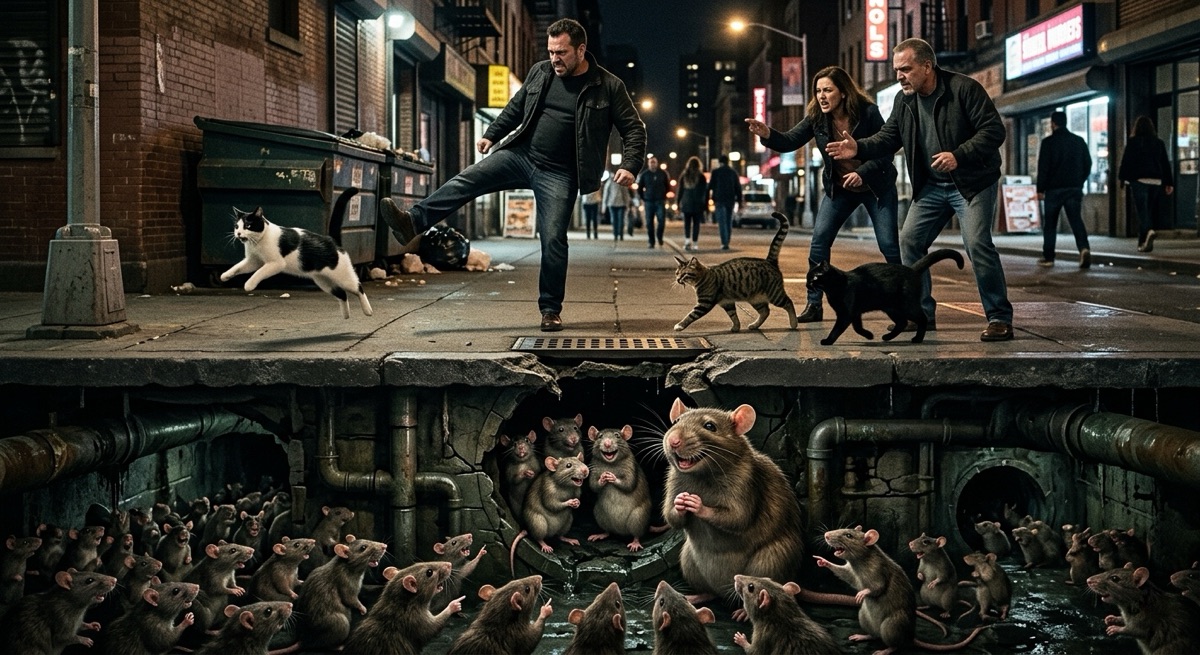
Within this system, humans, rodents, street cats, food waste, and subterranean infrastructure have forged a delicate, functional equilibrium over generations:
- Street cats patrol residential alleys, their scent and territorial behavior suppressing subterranean rodent populations, acting as natural sentinels of municipal sanitation.
- Dedicated volunteers provide clean, managed rations, anchoring feline movements while conducting systematic sterilization and vaccination, keeping populations on a steady, humane decline.
This system was never pristine, but it was pragmatic, cost-effective, and remarkably resilient.
Unfortunately, modern urbanites accustomed to sanitized illusions cannot tolerate the presence of species they personally dislike. Disregarding biological behavior and ecological realities, they resort to punitive decrees—demanding fines, bans, and eradication.
This administrative hubris has yielded a lose-lose disaster:
Conclusion: The Urgent Need for Dynamic Ecological Wisdom
Looking into the wary eyes of a feral cat lurking in remote wilderness, we must confront an undeniable truth: nature operates not on moralistic slogans, but through intricately interconnected ecological networks.
A mature society does not chase the naive illusion of “instant elimination.” It practices dynamic equilibrium through precise management. By restoring regulated, sanitary feeding stations, we anchor feline populations within wildlife-free urban boundaries where volunteers can systematically execute TNR and vaccination programs.
If policy-makers persist in being swayed by emotional purism and sweeping bans, the multiplying paw prints of feral cats across our wild hills will stand as an enduring monument to human folly.
Support Independent Perspectives & In-Depth Insights
Every thoughtful analysis and candid critique comes from our dedication to truth and quality. We choose not to follow sensational algorithms or clickbait headlines.
Sustaining independent research requires reader support. Make a one-time or monthly contribution, securely processed by Google.
Payments secured by Google · Manage or cancel anytime in your Google Account


Comments