
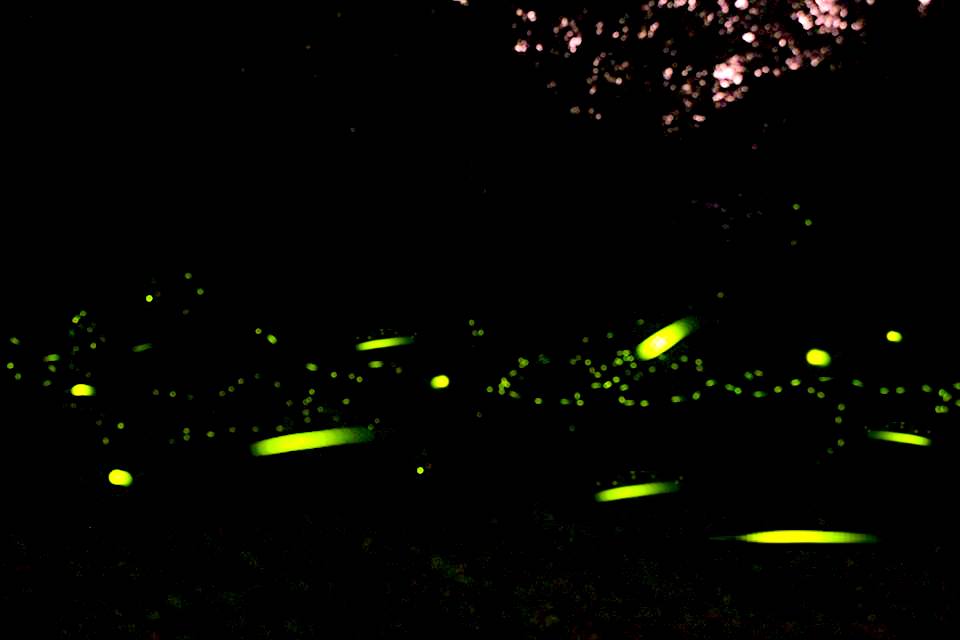
One year, while searching for fireflies in the mountains behind Hsinchu, Mizuc ran into another group of passersby who were there for the exact same purpose.
They were a group of men and women, office workers who looked to be around 27 years old.
Although we were not in the same party, there was only one trail, so we walked alongside each other for a short distance.
One of the women in their group left an indelible impression on me. When we suddenly discovered a massive swarm of fireflies—a moment that should have been pure delight—she abruptly asked the guy next to her in a coy tone: “Can fireflies burn you?”
Because that hidden trail was sparsely visited and had been completely silent, her question rang out crystal clear to everyone present. My buddies and I exchanged bewildered glances, discovering firsthand just how painful it is to stifle laughter in a pitch-black mountain forest.
To cut straight to the conclusion: yes, the light emitted by fireflies does indeed generate heat!
The bioluminescent principle of fireflies relies on luciferase enzymes within their bodies. When oxygen binds with calcium, adenosine triphosphate (ATP) and chemical luciferin containing phosphorus react within the luciferase enzyme, releasing energy in the form of visible light.
However, because this form of bioluminescence is remarkably efficient, only 2% to 10% of the energy is converted into heat. The temperature produced by this heat has absolutely zero effect on human skin—and indeed causes no harm to the firefly itself. Therefore, firefly light is widely regarded as a classic form of “cold light.”
As for why fireflies glow in the first place, what is their purpose?
The answer is quite straightforward: adult fireflies glow primarily to locate peers and court potential mates.
Moreover, it is not just adults that glow—fireflies in their larval and pupal stages also produce luminescence.
Larvae emit light to illuminate their nocturnal surroundings and signal warnings, while pupae typically glow only when disturbed, warning potential predators that they taste terrible (firefly larvae contain defensive steroids that deter other insects and predators).
So next time you head outdoors, don’t just look up at the fireflies fluttering through the night sky; search near freshwater streams, and you might spot glowing firefly larvae as well!
Support Independent Perspectives & In-Depth Insights
Every thoughtful analysis and candid critique comes from our dedication to truth and quality. We choose not to follow sensational algorithms or clickbait headlines.
Sustaining independent research requires reader support. Make a one-time or monthly contribution, securely processed by Google.
Payments secured by Google · Manage or cancel anytime in your Google Account



Comments