
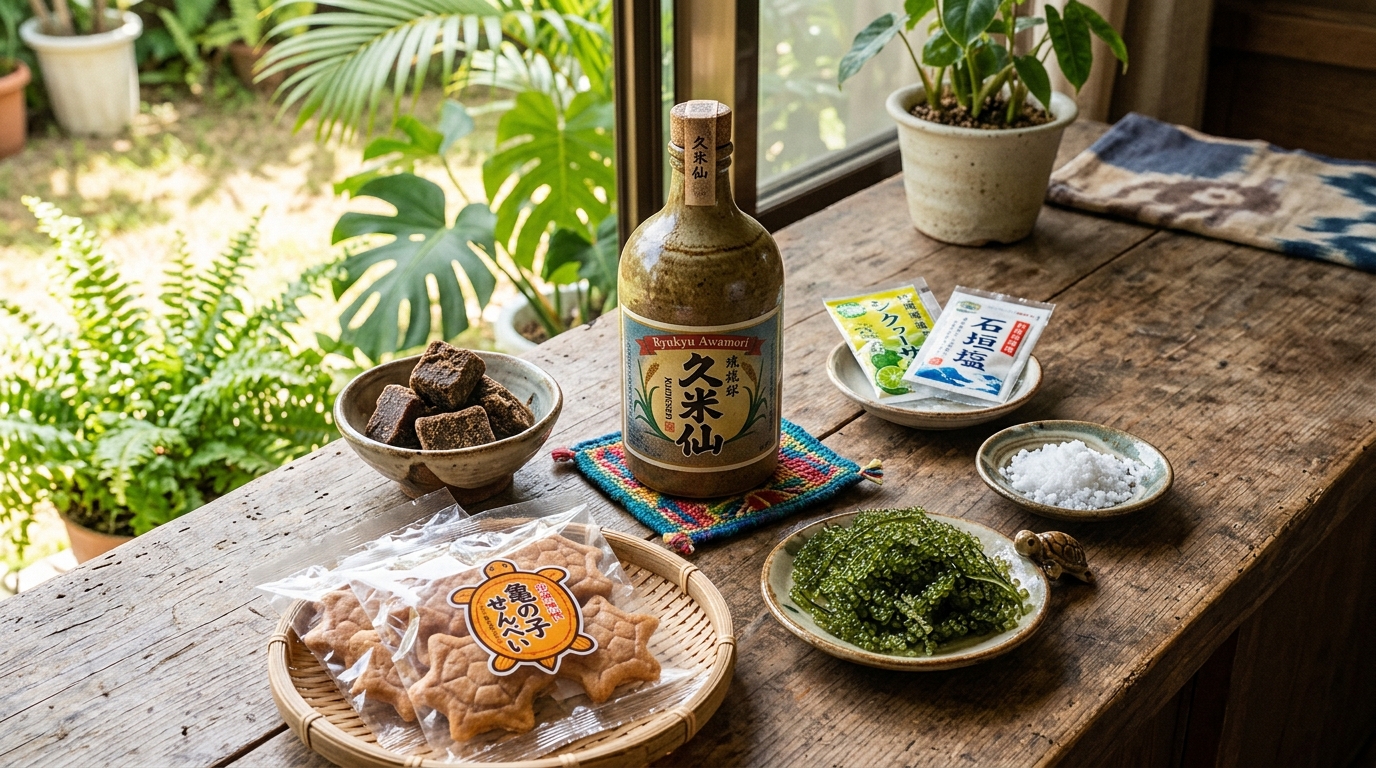
When traveling to Okinawa, limiting your souvenir haul to Beni-Imo tarts and Chinsuko biscuits barely scratches the surface of what this subtropical archipelago has to offer. A recent local Japanese travel guide published a viral ranking: the Top 10 Authentic Okinawa Souvenirs. Many first-time visitors were baffled by the selections:
“Number 10 is canned goods? Who buys canned meat as a travel souvenir?"
"Number 2 is ‘XX-Jiru’—meat organ broth soup? Did I read that right?"
"Number 7 is salt, and Number 5 is brown sugar… is this really a gift list?”
Believe it or not, this list struck a powerful chord among local Okinawans and seasoned Japanese travelers. It shuns tourist-trap confectionery and dives straight into Okinawa’s authentic daily foodways, shaped by centuries of Ryukyu heritage and post-war American influences. Found right on the shelves of local supermarkets like San-A, Kanehide, and AEON MaxValu, these items represent the true culinary soul of the island.
Here is the ultimate countdown from No. 10 to No. 1, complete with culinary insights, tasting tips, and customs packing advice.
No. 10: Canned Delicacies (缶詰 / Kanzume) — Post-War American Legacy in Island Cans
Seeing canned food at No. 10 often catches travelers off guard: “Why travel all the way to Okinawa just to bring home canned food?”
In reality, canned foods hold an irreplaceable place in modern Okinawan history. During the post-WWII American administration, vast amounts of military provisions were distributed across the island. The most iconic was Pork Luncheon Meat. Locals embraced it wholeheartedly, giving birth to iconic staples like Goya Champuru (bitter melon stir-fry) and Pork Tamago Onigiri (luncheon meat and egg rice balls).
Okinawan supermarkets feature entire aisles dedicated to luncheon meat cans, notably the beloved Danish Tulip brand and American SPAM, alongside canned simmered pork belly (Soki/Rafute) and island tuna.
No. 9: EGGO Salad Dressing (EGGOサラダドレッシング) — The Secret Weapon of Okinawan Kitchens
Often mistaken by tourists for a seasoning salt, EGGO Salad Dressing is actually a distinctive, American-style creamy mayonnaise-dressing hybrid with an iconic bright yellow label.
Introduced from the United States decades ago, EGGO became deeply rooted in Okinawan home cooking. Unlike mainland Japan’s tangy Kewpie mayonnaise, EGGO offers a subtly sweeter flavor profile, rich eggy richness, and a mild touch of mustard zest. It is ubiquitous across home kitchens and local bento shops, drizzled over shredded cabbage, potato salads, fried chicken, and breakfast toast.
- Recommended Recipe: Spread EGGO dressing generously over thick toast, top with a fried egg and sliced luncheon meat for the classic Okinawan breakfast.
No. 8: Native Seaweeds (海藻 / Umibudo, Aasa, Mozuku) — Ocean Jewels of the Coral Reefs
Surrounded by crystal-clear waters and coral reefs, Okinawa boasts some of the world’s finest edible marine algaes:
- Sea Grapes (海ぶどう / Umibudo): Nicknamed “green caviar,” known for its delightful popping texture and delicate brininess.
- Aasa (アーサ / Sea Lettuce): Harvested from pristine tidal flats. Okinawans love simmering it with silken tofu to make fragrant Aasa-jiru soup.
- Mozuku (モズク / Brown Seaweed): Packed with fucoidan and minerals, offering a refreshing, slippery crunch when dressed in sweet vinegar or fried into crisp tempura.
No. 7: Island Sea Salt (塩 / Shio) — Mineral-Rich Essence of the Sea
Okinawan sea salt is globally renowned for retaining abundant natural ocean minerals, delivering a mellow, umami-rich roundness rather than sharp saltiness.
The three undisputed champion brands are:
- Miyakojima Yukisio (雪塩): Milled to a powder as delicate as snowfall, boasting a Guinness World Record for mineral diversity.
- Ishigaki no Shio (石垣の塩): Evaporated in traditional flat pans with sea breezes, crunchy and ideal for grilled wagyu beef.
- Aguni no Shio (粟国の塩): Crafted through a painstaking weeks-long sun-drying and bamboo-tower dripping process, delivering profound depth to rice balls and broths.
Flavored varieties like snow-salt black sugar and yuzu pepper salt make compact, elegant gifts.
No. 6: Turtle-Shell Rice Crackers (亀の甲せんべい / Kame no Ko Senbei) — Addictive Nostalgic Crunch
Recognizable by their hexagonal cracked pattern resembling a tortoise shell, Kame no Ko Senbei are deep-fried wheat crackers cherished by generations of islanders.
Fried to a golden crisp in vegetable oil and seasoned with simple sea salt, these crackers are thick, hearty, and intensely crunchy. As you chew, the roasted grain aroma and savory saltiness build up, making it impossible to stop at just one. Generously sized family packs are sold at supermarkets for very affordable prices—perfect for office sharing.
No. 5: Pure Kokuto Brown Sugar (黒糖 / Kokuto) — Mineral Elixir from Island Sugarcane
Bathed in tropical sunshine and nourished by calcium-rich coral soils, Okinawan sugarcane yields dark, unrefined brown sugar (Kokuto) packed with natural iron, calcium, and potassium.
Eight designated outlying islands (Hateruma, Yonaguni, Iriomote, Iheya, etc.) produce Kokuto, each exhibiting unique terroir: some taste smoky and deep, while others carry subtle marine salinity.
- Popular Formats:
- Pure Sugar Cubes: Eaten directly as an afternoon energy boost, dissolved in ginger tea, or used in braised pork dishes.
- Snack Bites: Coated with kinako (roasted soybean powder) or cocoa for portable sweet treats.
No. 4: Cooking Seasoning Bases (○○の素 / Ryori no Moto) — Bring Izakaya Flavors to Your Home Kitchen
For home cooks wishing to recreate Okinawan comfort food effortlessly, supermarket pouches labeled “XX no Moto” are sheer magic.
Top varieties include:
- Juushii no Moto (じゅーしぃの素): Simply pour into your rice cooker with washed white rice. It infuses each grain with rich pork dashi, shiitake mushrooms, and carrots for instant Okinawan seasoned rice.
- Taco Rice Mix (タコライスの素): A fusion of savory seasoned minced meat and Tex-Mex spices. Spoon over warm rice with shredded lettuce and cheese for an iconic meal.
- Goya Champuru Sauce (ゴーヤーチャンプルーの素): Takes the guesswork out of balancing bonito stock and soy sauce for the quintessential bitter melon stir-fry.
(Note: Verify meat extracts against your home country’s import regulations.)
No. 3: Traditional Baking & Cooking Mixes (粉もの / Kona-mono) — Homemade Sata Andagi & Hirayachi
In the Kansai region, “Kona-mono” means Takoyaki and Okonomiyaki. In Okinawa, it represents two beloved island pastry staples:
- Sata Andagi Flour (サーターアンダギー粉): Okinawa’s celebratory deep-fried dough balls, famous for cracking open like blooming flowers. Crispy outside and dense inside, this premix requires only water and eggs before frying.
- Hirayachi Mix (ヒラヤーチー粉): Derived from the Okinawan dialect for “flat fry,” this is the island equivalent of a savory scallion pancake. Whisk with water, fold in chives, canned tuna, or green onions, and pan-fry until golden. It is Okinawans’ ultimate comfort food during typhoon days.
No. 2: Traditional Simmered Soups (○○汁 / Shimamono Jiru) — The Deep Soul of Ryukyu Cuisine
When the ranking was revealed, the entry that surprised overseas travelers most was “XX-Jiru”—traditionally simmered retort soup pouches!
Far from raw extract, these are slow-cooked, deeply comforting broths simmered for hours with premium local ingredients:
- Nakami-jiru (中身汁): Pork tripe and intestines meticulously cleaned, simmered in a clear, ginger-infused dashi with shiitake and konjac. Mild, refreshing, and completely free of gaminess, it is Okinawa’s premier celebratory New Year soup.
- Ikasumi-jiru (イカスミ汁): Jet-black squid ink soup enriched with tender squid and pork. Deeply savory with intense umami.
- Soki-jiru (ソーキ汁): Melt-in-your-mouth pork spare ribs stewed with kombu kelp and daikon radish.
- Hiija-jiru (ヒージャー汁): Wild, robust goat soup traditionally eaten for stamina, served with fragrant mugwort.
No. 1: Ryukyu Awamori (泡盛 / Awamori) — The 600-Year-Old Distilled King of Okinawa
Claiming the undisputed championship crown is Okinawa’s indigenous distilled spirit: Ryukyu Awamori!
Tracing its roots over 600 years to distilling techniques introduced from Siam (Thailand) during the Ryukyu Kingdom era, Awamori is Japan’s oldest distilled spirit. It is crafted exclusively with Thai indica rice and Okinawa’s unique black koji mold through full-koji fermentation, followed by single-pot distillation.
While freshly distilled Awamori is sharp and lively, spirits aged for three years or more earn the revered title of Kusu (古酒). Aged Kusu develops silky smoothness and complex bouquets reminiscent of vanilla, caramel, and dried fruit.
- Classic Labels:
- Zanpa (White / Black): Crisp, fruity, and welcoming for newcomers.
- Kikunotsuyu (VIP Gold): A benchmark aged Kusu with remarkable depth.
- Yaesen: From Ishigaki Island, dry and robust.
- Koregusu (コーレーグース): Island chili peppers steeped in Awamori. A couple of drops over Okinawa Soba or fried noodles delivers an exhilarating aromatic kick!
Summary: Top 10 Okinawa Souvenirs Overview
| Rank | Specialty | Signature Highlight | Best For | Recommended Location |
|---|---|---|---|---|
| 1 | Awamori / Kusu | 600-year distilled heritage, rich aged notes | Spirits lovers, connoisseurs | Distilleries, supermarkets, Naha Airport |
| 2 | Island Soups (XX-Jiru) | Nakami-jiru & squid ink, savory comfort | Adventurous foodies, hotel suppers | Supermarket retort pouch aisles |
| 3 | Baking Mixes (Kona-mono) | Sata Andagi & Hirayachi DIY mixes | Families, home bakers | Supermarket grain & baking aisles |
| 4 | Seasoning Bases (XX no Moto) | Juushii seasoned rice, Taco Rice mix | Busy professionals, home cooks | Supermarket spice & seasoning aisles |
| 5 | Pure Kokuto Brown Sugar | Unrefined sugar from 8 outlying islands | Health-conscious, tea lovers | Supermarkets, Kokusai Dori, farm markets |
| 6 | Kame no Ko Senbei | Crunchy salted turtle-shell rice crackers | Office snacks, beer pairings | Snack aisles, convenience stores |
| 7 | Island Sea Salt | Yukisio & Ishigaki salt, mineral sweetness | Culinary enthusiasts, chefs | Shio-ya (Ma-su Ya), supermarkets |
| 8 | Native Seaweeds | Umibudo (sea grapes), Aasa, Mozuku | Vegetarians, seafood enthusiasts | Makishi Public Market, seafood counters |
| 9 | EGGO Salad Dressing | Sweet-tangy American-style mayonnaise | Toast fans, breakfast lovers | Local supermarkets (A-Price, San-A) |
| 10 | Canned Provisions | Luncheon meat, tuna, post-war island history | History buffs, hotel suppers | Supermarket canned goods aisles |
On your next trip to Okinawa, venture beyond airport souvenir gift boxes. Spend an evening exploring San-A, Kanehide, or AEON, load your cart with these authentic treasures, and bring home the real flavors of the Ryukyu islands!
Support Independent Perspectives & In-Depth Insights
Every thoughtful analysis and candid critique comes from our dedication to truth and quality. We choose not to follow sensational algorithms or clickbait headlines.
Sustaining independent research requires reader support. Make a one-time or monthly contribution, securely processed by Google.
Payments secured by Google · Manage or cancel anytime in your Google Account




Comments