
Some say that the best way to experience the beauty of a city while traveling is by taking the local bus.
By riding the same buses locals use, you can immerse yourself in each city’s unique scenery and discover delightfully surprising shops and hidden gems.
Japanese bus etiquette and customs have several distinct features compared to other countries—from which door you board to how fares are calculated. Knowing these quintessentially Japanese boarding secrets before your trip will help you make the most of your travels!
- Destination Displays
- Communicating with the Driver
- Boarding Procedure
- Onboard Rules and Etiquette
- Alighting and Paying Fares
Destination Displays
- Destination signs are displayed on the front, rear, and boarding door side of Japanese buses. Always double-check before getting on.
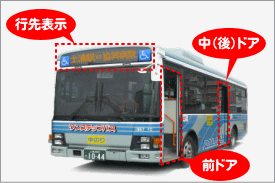 Exterior of a Japanese bus
- The same bus stop often serves multiple buses heading in different directions. Always verify that the bus is heading toward your destination before boarding.
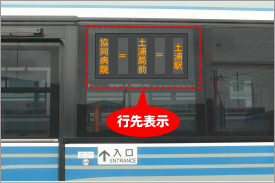 Japanese bus route destination sign
- Bus signs do not always list every single intermediate stop. If you are unsure, feel free to ask the driver.
Communicating with the Driver
There is an intercom located near the boarding door. If you need to ask the driver a question while boarding, you can use this intercom.
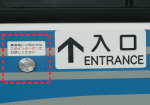 Japanese bus boarding entrance
Boarding Procedure
-
Board through the middle (or rear) door. Some long-distance highway buses only have a single front door, in which case all passengers board and exit through the front. (Please do not approach the bus until it comes to a complete stop and the doors are fully open.)
-
After boarding, you will see a numbered ticket dispenser (seiriken hakkouki) right by the door. Every passenger must take one ticket (known as a seiriken / numbered boarding ticket; please do not fold or lose it. Commuter pass holders should also take one). A number is printed on the ticket corresponding to the fare zone where you boarded.
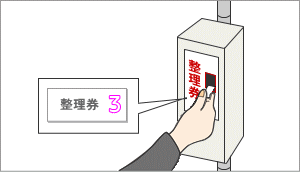 Japanese bus numbered boarding ticket
Onboard Rules and Etiquette
- If no seats are available, please hold firmly onto handrails or straps.
- Do not walk around while the bus is in motion. (Please wait until the bus has come to a complete stop before changing seats or preparing change.)
- Do not stick your hands or head out of the windows.
- Smoking is strictly prohibited on board.
- Light eating and drinking are generally permitted.
- Talking on mobile phones may disturb other passengers; please set phones to silent mode and refrain from calling.
Alighting and Paying Fares
- When the announcement chime broadcasts the name of your upcoming stop, press one of the nearby stop buttons. (The button will light up red once pressed. Do not stand up or move until the bus has come to a complete stop.)
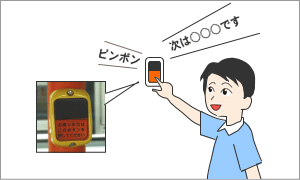 Japanese bus stop bell
- Checking your fare:
- An electronic fare display board (unchin hyoujiki) is mounted at the front of the bus.
- Locate the fare amount shown under the number corresponding to your boarding ticket.
- After arriving, the bus stop name and corresponding fares are also announced.
- Fares displayed on the board are standard adult fares (children typically travel at half price).
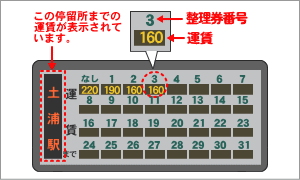 Japanese bus fare display
- Paying the fare:
- Cash or coupon tickets (kaisuken): Drop your boarding ticket (seiriken), coupon tickets, and exact cash into the fare box (unchinbako) all at once.
- If you don’t have exact change, use the change machine (ryougaeki) built into the fare box. It only accepts coins and 1,000-yen notes.
- Commuter pass: Drop your boarding ticket into the fare box and show your commuter pass clearly to the driver.
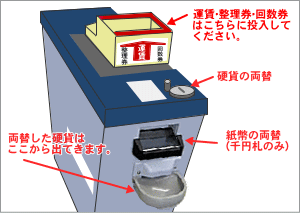 Japanese bus fare box
Support Independent Perspectives & In-Depth Insights
Every thoughtful analysis and candid critique comes from our dedication to truth and quality. We choose not to follow sensational algorithms or clickbait headlines.
Sustaining independent research requires reader support. Make a one-time or monthly contribution, securely processed by Google.
Payments secured by Google · Manage or cancel anytime in your Google Account

Comments