
Beef has always been an irresistible temptation for Mizuc. There is nothing quite like returning home with a fresh cut of steak, laying it across a smoking-hot cast-iron skillet, and hearing that sharp sizzle as caramelized aromas instantly satisfy the senses. Sprinkling fresh herbs alongside French fleur de sel elevates the aroma and richness to another level. Just reminiscing about it makes my mouth water.
The first time I heard of Angus black beef was on a late-night broadcast of the BCC Popular Network. I remember host and food journalist Wang Jui-yao introducing culinary delicacies (I playfully protest BCC’s late-night temptation). Sponsored or not, her vivid descriptions made the beef sound utterly delectable, making me want to rush out to a restaurant at three in the morning.
What is Angus Beef?
Beyond the native yellow beef commonly found in wet markets across Taiwan, I most frequently purchase American beef from Costco. An online search for Black Angus reveals this description:
“Black Angus cattle are recognized by their solid black coat and naturally polled (hornless) head. They feature a low-set, compact body with a small, square head and broad forehead. Viewed from the side, their profile forms a cylindrical, rectangular outline with short, sturdy legs and well-developed, plump musculature—the quintessential modern beef cattle build. Their intramuscular fat distributes evenly into fine marbling, producing a stunning cross-section that is widely recognized on the market as exceptionally tender and juicy. When cooked, this rich marbling melts into an intoxicating aroma, releasing the beef’s purest natural sweetness and umami, making it a favorite cut among steak aficionados.” (Excerpted from Taipei Riverside Market.)
After reading that description, I regretted not discovering Angus beef sooner—what a missed opportunity in my culinary journey!
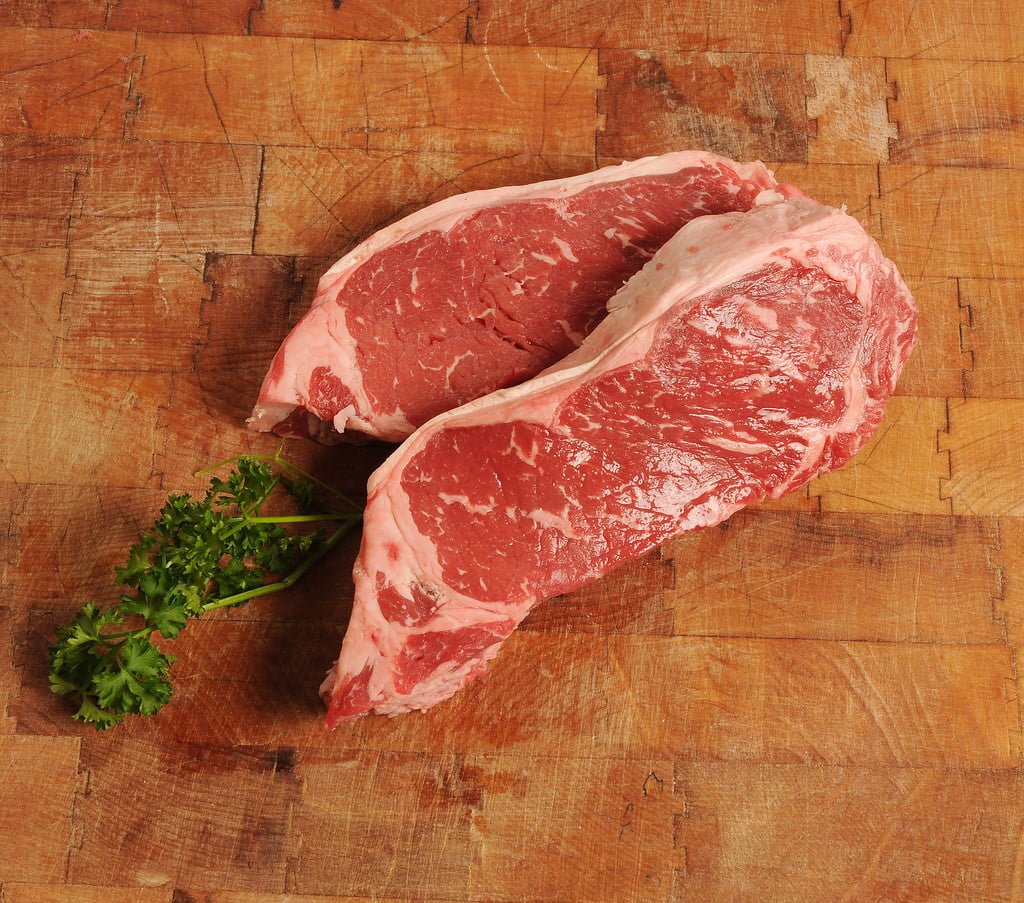 Angus Black Beef (Credits: Artizone)
Yet I unexpectedly realized that I had already tasted Angus beef without knowing it! It turns out that the beef patties used in Burger King in New Zealand were sourced from New Zealand-bred Angus cattle. Years ago during a working holiday in New Zealand, I dined at Burger King several times. Peculiarly enough, I distinctly recall the texture and flavor tasting notably superior to fast food in Taiwan. At the time I thought it was just the fresh southern air (laugh), but not having tasted a proper Angus steak remained on my mind.
Origins of Angus Cattle
The full breed name is “Aberdeen Angus”, originally bred in the historic counties of Aberdeenshire, Angus, and Kincardineshire in northeastern Scotland, combining regional names into the title “Angus.”
In the early 19th century, pioneering breeders selectively bred Angus specifically for high-yield beef production, shaping the modern breed known today: solid black, hornless, compact, and muscular with exceptional meat quality. Consequently, Angus cattle were exported worldwide (including to the United States [2. U.S. Meat Export Federation.] and Canada [3. Canada Beef Export Federation.]), leading to various regional breeding programs.
Do Good Steaks Need Certification?
Unsurprisingly, premium beef carries its own dedicated certification system. The certifying body is Certified Angus Beef (CAB), an inspection and certification program established in 1978 by the American Angus Association to verify quality standards, serving as a powerful benchmark for promotion and marketing.
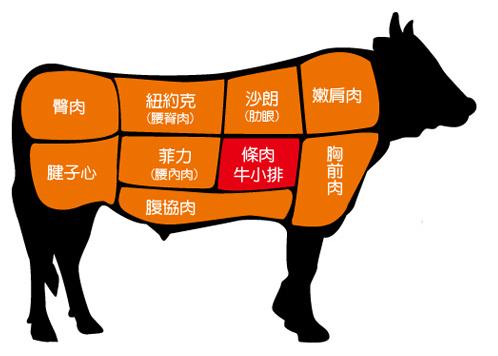 Beef cuts distribution diagram.
Although certification standards exist and numerous restaurants advertise CAB-certified Angus beef, the best way to enjoy truly high-grade beef in Taiwan—aside from dining at reputable fine-dining establishments—is to find a reliable purveyor or grocer, such as Costco or the Taipei Riverside Market platform (available online [3. Taipei Riverside Market Online Shopping.]), and sear it yourself in your own kitchen (laugh).
In addition, the USDA beef grading system established by the United States Department of Agriculture remains the most internationally recognized standard, graded primarily by cattle maturity and the degree of intramuscular marbling in the ribeye cut. The eight grades are Prime, Choice, Select, Standard, Commercial, Utility, Cutter, and Canner.
Among these, Prime and Choice are the predominant grades found in supermarkets and specialty butcher shops. For those interested in deeper details on grading standards, you can refer to the USDA Beef Grading System compiled by the U.S. Meat Export Federation [4. Originally written January 8, 2011; first revised April 6, 2016.].
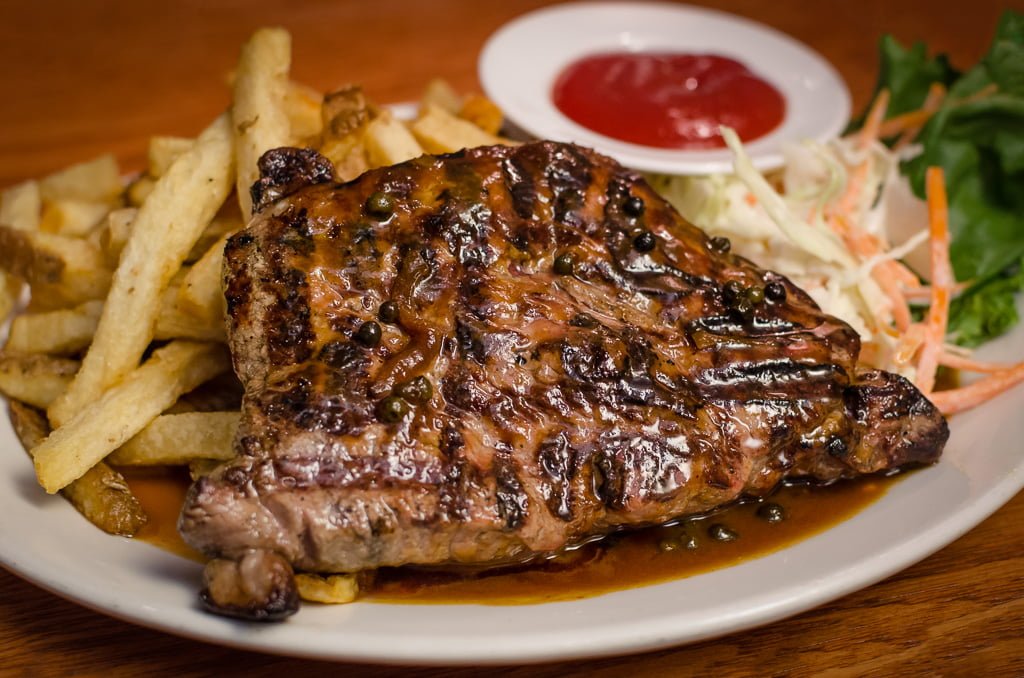 Delicious Angus Black Beef Strip Steak (Credits: qasic)
Preserving Angus Beef
Beef exhibits its finest flavor when consumed at peak freshness. Unless you know you cannot consume it promptly, freezing should be a secondary choice. When defrosting frozen cuts, allow them to thaw slowly in the refrigerator for about half a day to retain maximal juices and texture.
Support Independent Perspectives & In-Depth Insights
Every thoughtful analysis and candid critique comes from our dedication to truth and quality. We choose not to follow sensational algorithms or clickbait headlines.
Sustaining independent research requires reader support. Make a one-time or monthly contribution, securely processed by Google.
Payments secured by Google · Manage or cancel anytime in your Google Account




Comments