
Once the languid days of May pass and the Dragon Boat Festival arrives, the sweat-inducing heat of summer kicks into high gear. Summer always evokes thoughts of refreshing refreshments: cool ice cream, chilled sweet watermelon, shaved ice, Yakult on ice, ice-queen beauties 💕, and most quenching of all, a tall glass of ice-cold fresh lemon juice.
The market offers all kinds of lemon-squeezing tools, from manual to electric, from cheap plastic to metal alloys, ranging from twenty or thirty NTD (like at Daiso) to thousands or tens of thousands. But just as the cleverest cook cannot cook without rice, there are times when you find yourself stranded without any gadget in sight (or with drawers overflowing with redundant kitchen clutter). Squeezing by hand, the age-old method, remains the ultimate reliable solution.
Furthermore, many modern squeezer tools are made of plastics or mysterious alloys that might react under the corrosive acidity of citric acid, raising health concerns. Unless you purchase a certified safe product—such as the white ceramic squeezer I specifically chose in the photo below—squeezing by hand is often far more reassuring.
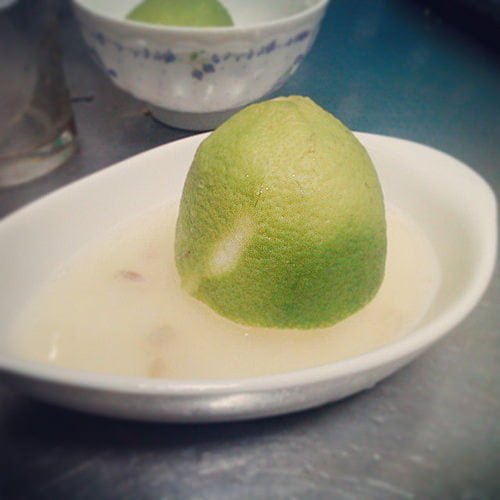 A reassuring white porcelain squeezer (Photo / Lin Jin-Liang)
Today, our culinary guide shows you that with the proper knife-cutting technique, even if you are not Sylvester Stallone or Arnold Schwarzenegger, you can effortlessly hand-squeeze the maximum amount of lemon juice with your bare hands, earning admiration for your everyday kitchen wisdom!
 Lemon
The Traditional Lemon Cut
As illustrated in Figure 1 below, the “cut right in half” method is the standard way most people slice lemons. This quick and convenient cut splits the lemon into two hemispheres, ideal for pairing with dedicated tabletop citrus juicers. However, the thick outer peel and dense fibers remain largely intact. If you attempt to squeeze it dry with your bare hands, you would need superhuman strength to extract all the liquid.
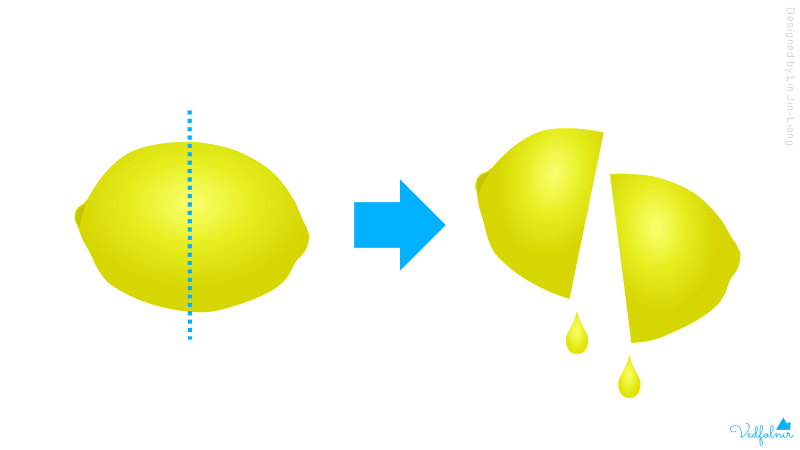 Figure 1, Halving a lemon.
The Modern Hand-Squeeze Cut
If you want to extract juice purely by hand, check out the cutting technique outlined below.
Refer to Figure 2, a fruit slicing method I call the “four-side cut.”
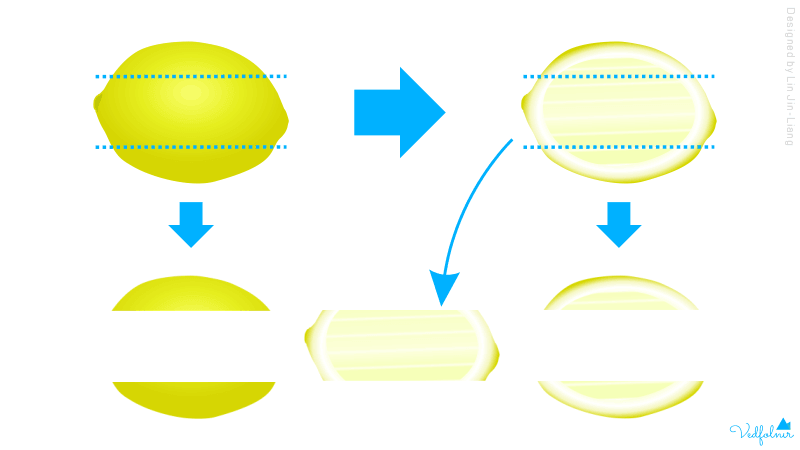 Figure 2, Four-side lemon cut.
First, take a whole lemon and slice off two opposing cheeks along the blue dashed lines shown in the top-left diagram of Figure 2. Set these two side wedges aside, then rotate the central block 90 degrees. At this point, your perspective matches the top-right diagram, providing a clear view of the lemon’s interior.
Next, slice off the two remaining opposing sides along the blue dashed lines shown in the top-right diagram. You will now have the parts shown in the lower row: four flat lemon slices and a rectangular central core with just bits of skin and stems remaining at the two ends.
Because we have severed the structural tension of the outer peel, the four thin side slices can be folded in half and juiced effortlessly with your fingers. As for the central core, simply pinch the two stem ends between your fingers and wring it like a wet towel; all the remaining juice will pour out effortlessly.
With just four simple knife strokes, a splash of water, and a touch of honey, you can enjoy a glass of sweet, tangy, chilled fresh lemonade that would normally cost sixty or seventy NT dollars at a drink stand!
Product References
- Glass manual citrus squeezer
Support Independent Perspectives & In-Depth Insights
Every thoughtful analysis and candid critique comes from our dedication to truth and quality. We choose not to follow sensational algorithms or clickbait headlines.
Sustaining independent research requires reader support. Make a one-time or monthly contribution, securely processed by Google.
Payments secured by Google · Manage or cancel anytime in your Google Account



Comments