
Tag

#Insulin Resistance

6Stories

The Complete Guide to Blood Sugar Reversal: Overcoming Diabetes and Metabolic Collapse — 12 Essential Reads from Muscle Science to Longevity
Health·

The Complete Guide to Blood Sugar Reversal: Overcoming Diabetes and Metabolic Collapse — 12 Essential Reads from Muscle Science to Longevity

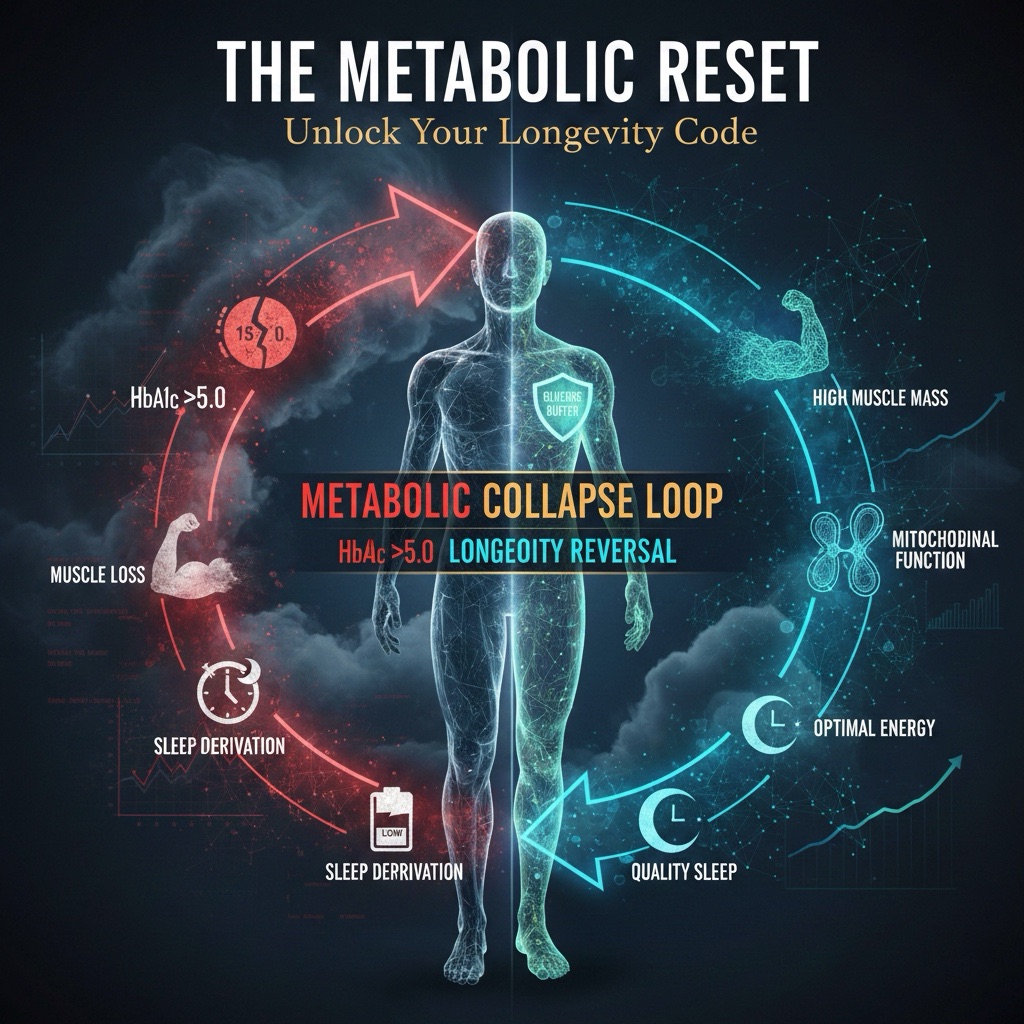
This is far more than a routine guide for lowering blood sugar; it is a physiological revolution in achieving metabolic freedom. Why is HbA1c > 5.0% an early warning sign? Why is muscle loss the true driver behind diabetes? This 12-part series guides you from debunking myths to practical protocols, building a high-tolerance longevity system.

One Sleepless Night Ruins Weeks of Metabolism? How Sleep Deprivation Dismantles Muscle via Cortisol
Health·

One Sleepless Night Ruins Weeks of Metabolism? How Sleep Deprivation Dismantles Muscle via Cortisol

Many assume the exhaustion after an all-nighter can be erased by simply sleeping in later. Yet physiological research proves that just a single night of sleep deprivation causes acute insulin resistance comparable to weeks of a high-sugar diet. This article examines the nighttime tug-of-war between growth hormone and cortisol, demonstrating how sleep deprivation impairs insulin receptors and triggers catabolic pathways that break down muscle tissue, leaving you with elevated blood sugar and eroded muscle mass.

The First Line of Defense in Aging: Why Getting Older Demands Resistance Training
Health·

The First Line of Defense in Aging: Why Getting Older Demands Resistance Training

As people age, blood sugar and waistlines often spiral out of control even when caloric intake remains unchanged. This is not simply chronological aging, but sarcopenic insulin resistance. This article explores anabolic resistance in older adults—where muscle tissue becomes 'hard of hearing' to nutritional and mechanical stimuli. Learn why gentle walking cannot reverse this condition, and why intense mechanical tension and strategic protein intake are crucial.

The Less You Eat, the Higher Your Blood Sugar? The Metabolic Paradox of Survival Mode
Health·

The Less You Eat, the Higher Your Blood Sugar? The Metabolic Paradox of Survival Mode

When you adopt severe caloric restriction below your basal metabolic rate (BMR) to lower blood glucose or drop weight, your body interprets this as a mortal survival threat rather than a fat loss cue. This article examines how the hypothalamus triggers survival compensation—downregulating active thyroid hormone (T3) and driving cortisol up—forcing the liver into hyperactive gluconeogenesis by cannibalizing muscle tissue.

Why Won't My Blood Sugar Come Down Even Though I Don't Eat Sugar? The Metabolic Truth Behind "HbA1c > 5.0"
Health·

Why Won't My Blood Sugar Come Down Even Though I Don't Eat Sugar? The Metabolic Truth Behind "HbA1c > 5.0"

Many people find that even without sugary drinks or desserts, their HbA1c stays above 5.0 and even creeps upward. Conventional wisdom blames "too much sugar," but physiology reveals a harsher truth: this is often an early warning that your metabolic buffer is draining away. This article explains why muscle loss is the real culprit behind runaway blood sugar, and why an HbA1c of 5.0 is a longevity watershed you must take seriously.