
The golden ratio, often referred to as the golden section, is a revered concept in the art world, considered by many artists and photographers as an essential element of a beautiful composition. The ability to discern the golden ratio hidden in the natural world is often hailed as a magical skill, dubbed the “photographic eye.” But do you know which specific points in a photograph align with the golden ratio to create a visually stunning image?
Personally, I’m no scholar, and my understanding of photography theory is rudimentary at best. My work is mostly just a collection of random snapshots.
Yet, a few days ago, a girl approached me and asked, “What is the golden ratio in photography?”
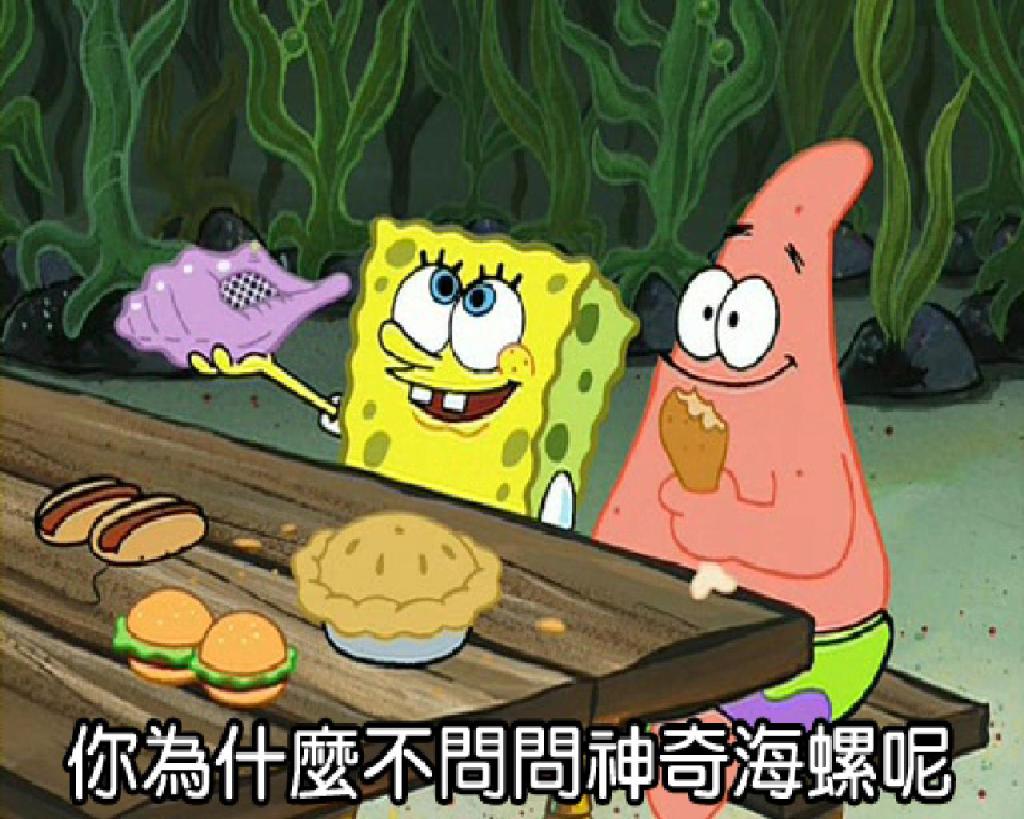
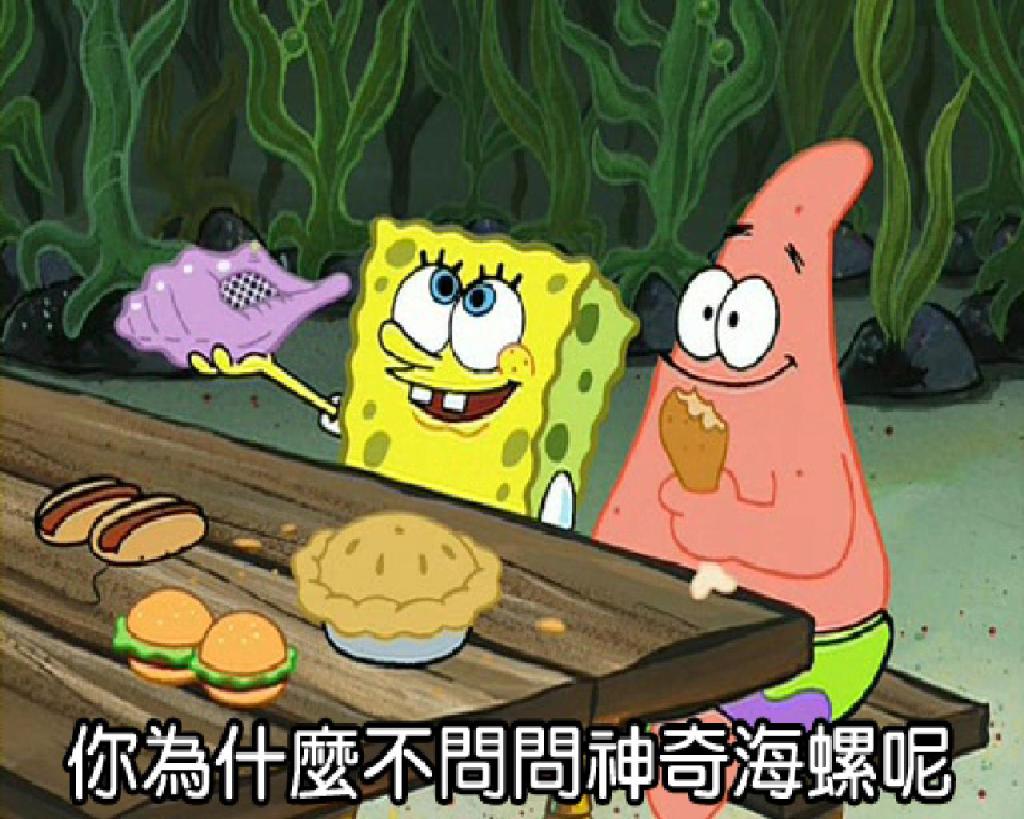
My first instinct was to snap back, “Go ask the Magic Conch!”
But to avoid a potential thrashing, I brushed up on Wikipedia and decided to compile a concise overview of the golden ratio’s theory and application in photography for everyone’s benefit.
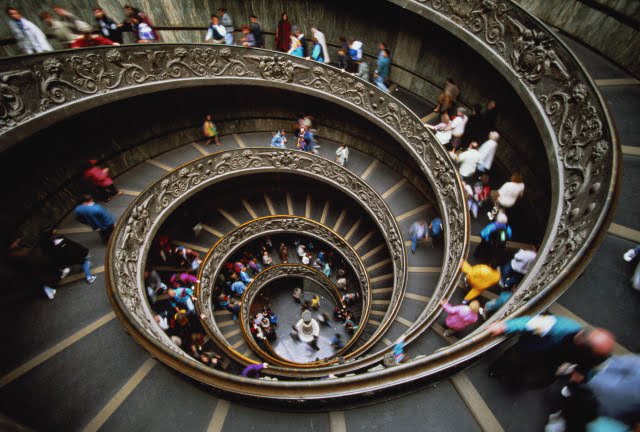
The grand staircase is a clue.
To explore the golden ratio in imagery, we must first understand that it’s a proportion—a mathematical representation of aesthetic phenomena, brought to life through numbers and geometry. (Math isn’t my strong suit, especially algebra, though I’m decent at geometry—think night-and-day difference =w=).
Strictly speaking, the golden ratio is a digitized “paradigm of beauty” but lacks the essence of “absolute beauty.”

So, the idea of a genius scientist or mathematician suddenly devising a formula one afternoon and demanding universal agreement that it represents the golden ratio? That’s simply not how it works.
Beauty is subjective, intertwined with emotions and personal consciousness—an intimate, individual experience.
For me, a photo is beautiful if it evokes emotion and resonates deeply.
Thus, while the golden ratio offers beginners a compositional guideline, it’s crucial to remember that the interplay of composition and emotion is the true art.
Fibonacci Sequence
Fascinatingly, the golden ratio emerged from mathematicians observing nature’s beautiful patterns, constructing a theory through numbers and geometry.
Through recursive calculations in the Fibonacci Sequence, the derived results remarkably mirror the structural patterns of many natural organisms. This similarity often leads people to conflate the golden ratio with the Fibonacci Sequence.
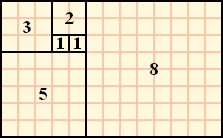
The Fibonacci Sequence follows the formula: “a1=a2=1, a(n+2)=a(n+1)+a(n).”
Calculating step-by-step yields an infinite sequence: “1, 1, 2, 3, 5, 8, 13, 21, 34, 55, 89, 144, 233, 377, …”
Dividing each term by the next produces a value that approximates the golden ratio, becoming more precise with larger numbers:
- 55/34=1.617647
- 89/55=1.618181
- 144/89=1.617977
- 233/144=1.618055
Golden Section
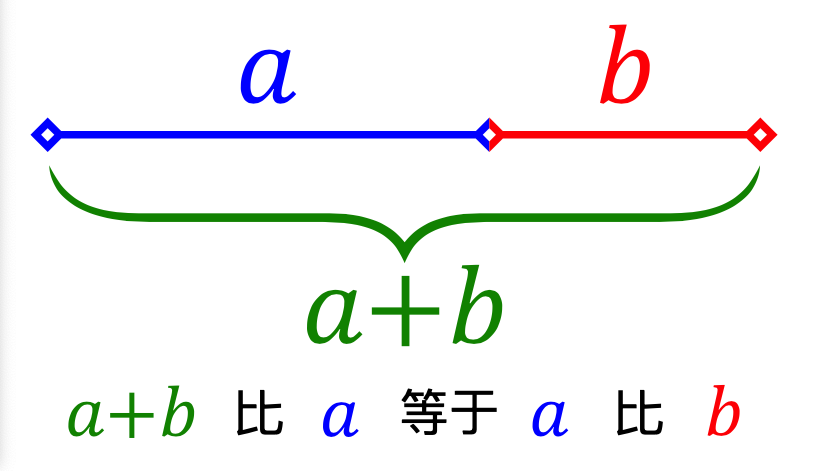
The golden section divides a line into two segments such that the ratio of the total length (a + b) to the longer segment (a) equals the ratio of the longer segment (a) to the shorter segment (b).
Also known as the golden ratio, this proportion embodies mathematical harmony.
The golden section exudes strict proportionality, artistry, and harmony, encapsulating rich aesthetic value. In practice, it’s typically approximated as 0.618 or 1.618, much like pi is approximated as 3.14. Found in nature’s flora and fauna, it’s widely applied in industrial products, electronics, architecture, and art for both functionality and beauty.
The golden ratio is denoted by the Greek letter  , expressed algebraically as:
 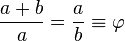 .
.
Below is a viewfinder diagram I designed. The double horizontal and vertical lines, along with their intersections, simulate the viewfinder of a DSLR camera or the customizable grid on a digital camera’s LCD screen.
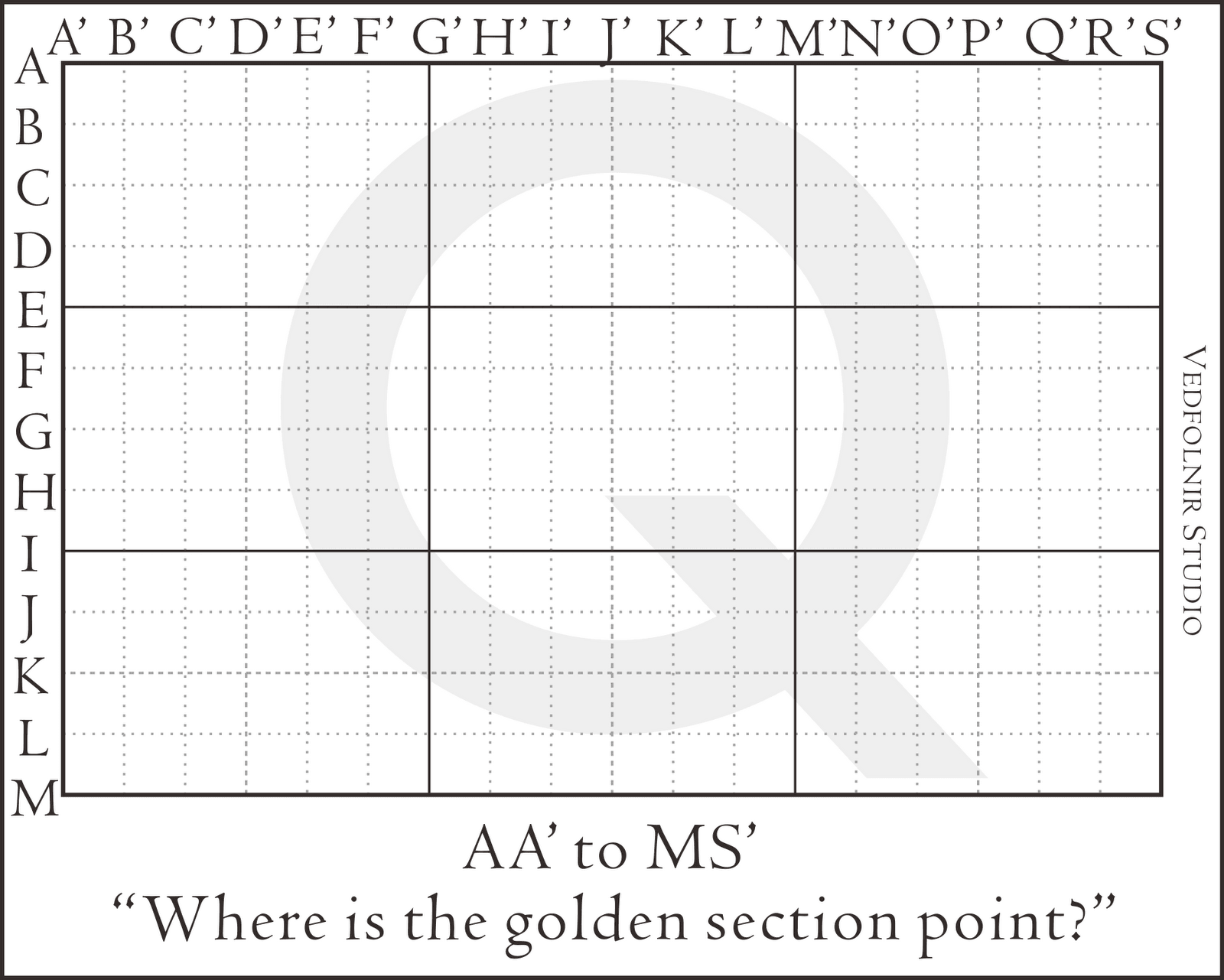
In the diagram, vertical axis points are labeled A to M, and horizontal axis points are labeled A’ to S’. Intersections of these lines represent different coordinates on the frame.
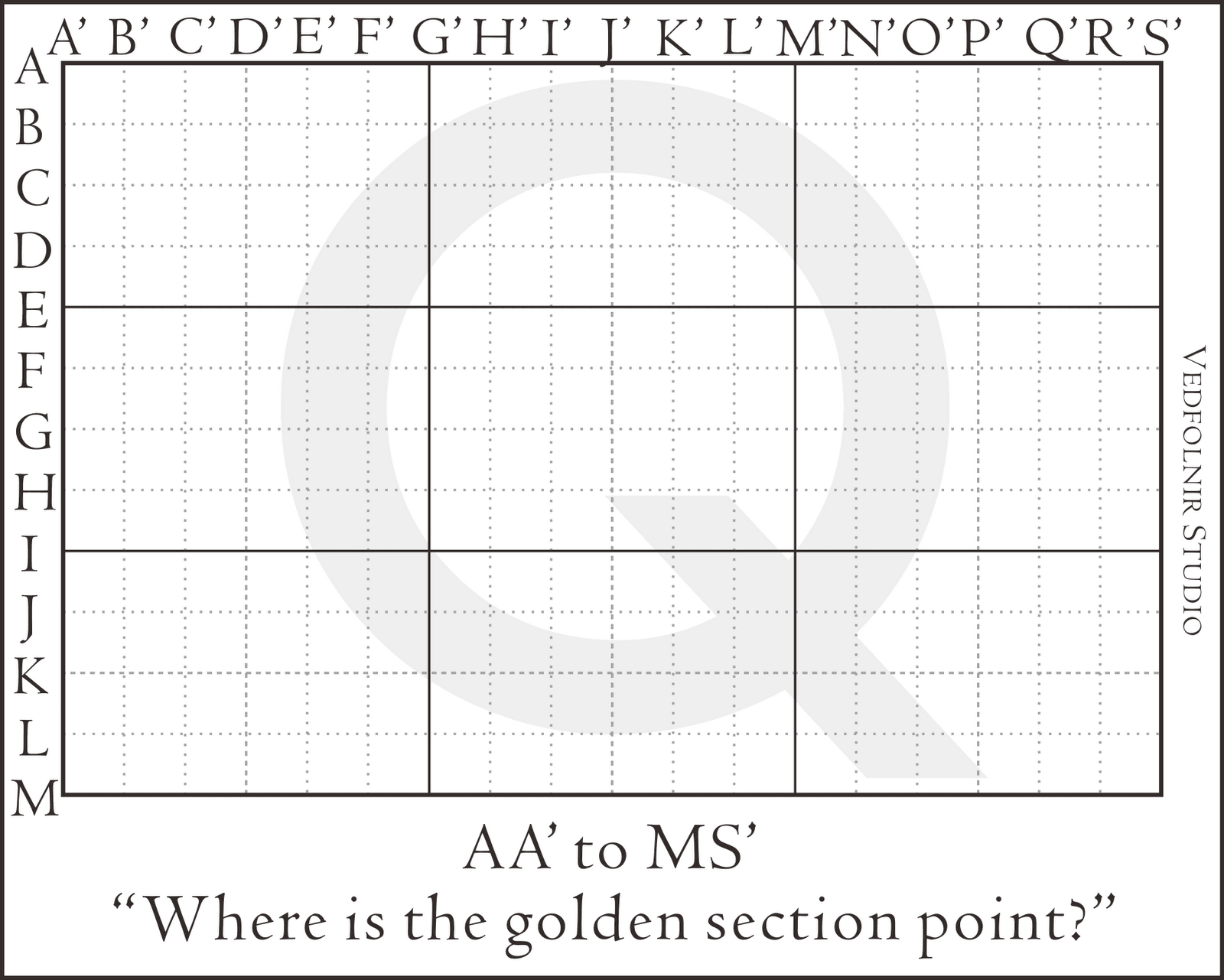
Conventionally, when composing a shot, the golden ratio aligns with the main lines—E, I, G’, and M’—chosen based on the subject matter.
For images with a focal point, the golden ratio typically places the subject at the intersections EG’, IG’, EM’, or IM’.
In the viewfinder diagram, the visual focal point, represented by the large Q, falls at the IM’ intersection, along Q’s diagonal. Do you see it the same way?
發佈留言